
 Dimitri Burkhard
Did you know that coffee is 20 cents cheaper at Café Müller than at Café Meier two streets over?
That is a perfectly normal conversation in Switzerland. The Swiss talk about money constantly. They compare prices, track discounts, debate exchange rates, and calculate exactly how much cheaper everything was on their last holiday abroad.
They just never, under any circumstances, talk about what they actually earn.
For me, this gap between the constant attention to money and the complete silence around income is one of the most fascinating things about Swiss culture.
Mr. and Mrs. Switzerland: A Portrait
The following is loosely based on a piece by Salome Müller.
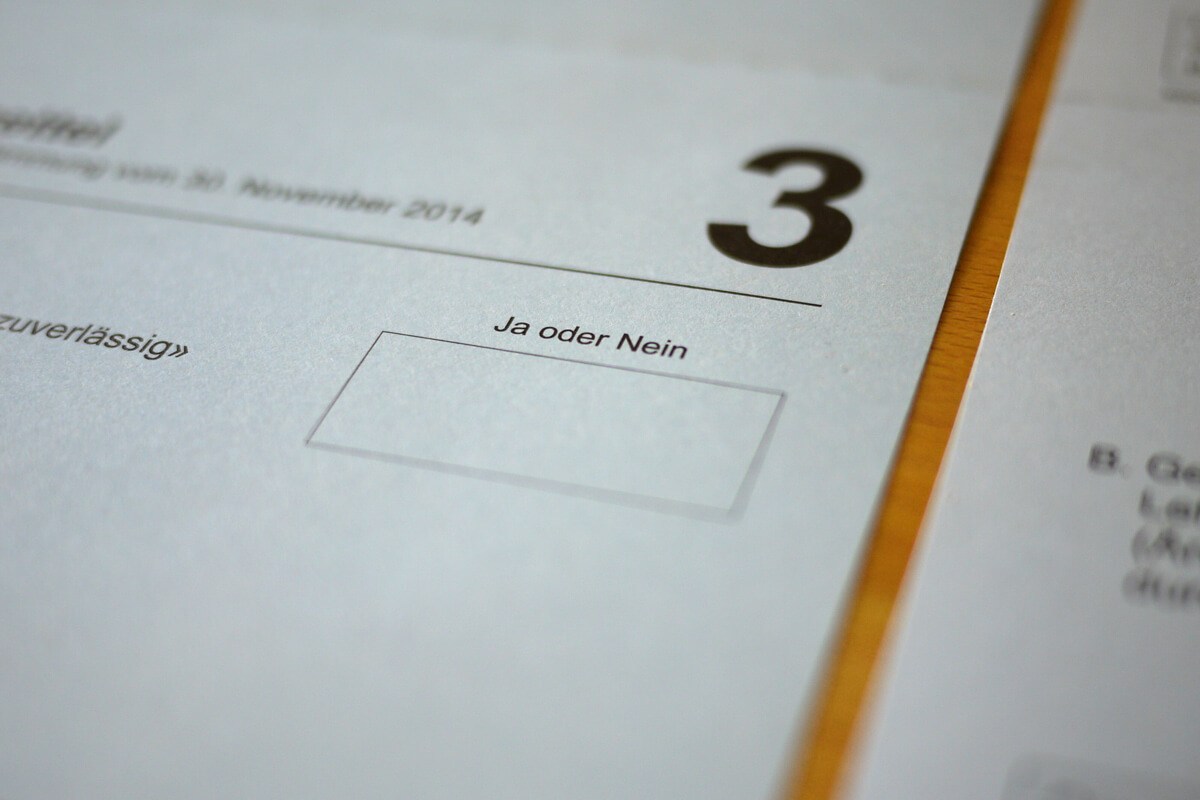
Meet a typical Swiss couple. They work regular hours, live modestly, vote responsibly, and save a solid portion of every paycheck. When a national initiative proposed extending paid vacation from five to six weeks, they voted against it.
And besides, who looks after the economy when everyone is on holiday?
Our couple never complains about their salary out loud. He might have muttered about it once, behind a closed door. But at dinner with friends, the topic doesn’t come up.
“It only leads to misunderstandings,” she says. He agrees: “There are too many haters. And I’m pretty sure our neighbor earns far more, given that car.”
Instead, they pack leftovers for lunch twice a week. Every franc saved is one franc closer to the next vacation.
And when they come back from two weeks at the beach – tanned, rested, and mildly scandalized – they can’not’t stop talking about one thing: what a bargain it was.
The charter flight, the hotel, the restaurants, the rental car… Even the medications and the leather shoes at the market, everything was mega cheap!
But their salary? That stays between them and their tax advisor.

Why the Swiss Never Talk About Their Salary
In Switzerland, asking someone what they earn is about as welcome as asking their body weight. It’s simply not done; not among colleagues, not among friends, and certainly not at a dinner table.
This runs deeper than politeness:
- Envy is taken seriously. The Swiss are acutely aware that income differences create social friction. A high salary invites resentment, and a low one invites pity. Neither is welcome.
- Privacy is a core value. Financial matters belong to the private sphere, not the social one. What you earn is your business alone.
- Modesty is a virtue. Talking about income is a form of showing off, and showing off is considered poor taste in Switzerland.
- The system is trusted. Strong labor protections, collective agreements, and published pay scales in many industries mean individual salary comparison feels less necessary than it does in other countries.
What the Swiss Actually Earn in 2024
According to the Swiss Federal Statistical Office, the gross median monthly wage in Switzerland in 2024 was CHF 7,024 for a full-time position. That’s about a 3% increase from 2022 when average wages were CHF 6,788.
The spread, however, is wide:
- The bottom 10% of earners make less than CHF 4,635 per month
- The top 10% earn more than CHF 12,526 per month
- Around one in three employees receives an annual bonus, averaging CHF 11,967
Regional differences are also significant. The median salary in the Zurich region is CHF 7,502, compared to CHF 5,708 in Ticino. (Source: bluewin)
The highest-paying sectors are IT, pharmaceuticals, banking, and tobacco, with gross monthly wages between CHF 9,900 and CHF 14,300.
Unfortunately, a gender pay gap still persists, although it has been narrowing consistently. Men earn a median of roughly CHF 6,963 per month; women earn around CHF 6,211.
The Swiss Apprenticeship System:
A Different Path to a Good Salary
Switzerland has one of the most respected vocational training systems in the world. Instead of going straight to university, around two-thirds of Swiss school leavers choose a four-year apprenticeship.
There, they learn a trade while attending school part-time, emerging with certified skills and a direct entry into the workforce.
It was a political flashpoint in the early 2010s when Aldi Suisse and Lidl publicly announced minimum salaries of CHF 4,700 and CHF 4,000 respectively – even for unskilled laborers.
It was a direct attack on apprentices who had spent four years training for a trade and in many cases were earning similar amounts. The announcement was heard loudly in a country where salary is normally never discussed!
The situation has improved since then, but the tension remains. In my research, I found that one in three people who have completed an apprenticeship and work full time still earns less than CHF 5,000 per month. Those numbers are according to the Swiss Trade Union Federation.
Swiss unions have called for a minimum CHF 5,000 floor for all qualified apprenticeship graduates.
Current average apprentice earnings sit around CHF 16,400 per year gross, or roughly CHF 1,370 per month during the training period itself. After qualification, wages rise significantly depending on trade and experience.
The Swiss government continues to defend the apprenticeship model as a sustainable investment. A certified trade education and a stable skill set are seen as a stronger long-term foundation than a degree without vocational grounding. And Switzerland’s persistently low unemployment rate is partly attributed to the practical focus of this system.
Lots of Wealth, But Without Show
Switzerland consistently ranks among the wealthiest countries in the world. You might not always be able to tell, though.
Millionaires drive unsuspecting mid-range cars. People with substantial savings rent modest apartments. A well-made jacket worn for ten years says more about Swiss values than a designer one bought last season.
An outrageous display of wealth is widely seen as not just poor taste, but a sign of insecurity rather than success.
The Swiss distinction between having and showing is deeply cultural. It shapes everything from architecture and fashion to the cars on the road. If you are genuinely successful here, you do not need to announce it.
A Word About Swiss Saving Culture
I don’t believe the Swiss savings ethic is just a stereotype about older generations.
In many families, saving starts at a child’s early age. Even if it’s just a few coins, many Swiss kids receive pocket money, learn to count it, and decide what it is worth.
Later, as adults, some carry this forward. I heard that some will even budget with cash in envelopes. Once the envelope is empty, it is empty. Even as a member of Gen Z, I grew up with the mindset of “earning before spending.”
A study by the Jacobs Foundation found that 95% of Swiss young people between 15 and 21 save sporadically, 83% say they save regularly, and 73% say they look for savings potential when buying something.
The unofficial national Swiss theme: Sparen ist geil – “saving is great.” It sounds like a joke, but there’s some truth to it.
Cross-Border Shopping Trips
The Swiss franc is one of the world’s classic safe-haven currencies. That keeps it persistently strong. And it’s why living in Switzerland is so expensive.
As a consequence, many residents have joined somewhat of a cultural ritual: cross-border shopping trips.
On weekends, many families will drive straight to Konstanz or Lörrach in Germany. In the local grocery chains, they can stock up on everyday goods that cost significantly less than in Switzerland.
From my own experience, the quality of goods is at par. There is an abundance of choice, including lots of organic produce and foods. I personally draw the line with meat, however, as the European Union seems to have lesser quality standards compared to Switzerland.
Granted, the border crossing takes a little time. For many, it is still worth the savings.
Taxes, Debt, and the Annual Reckoning
The “Newly Swissed” among you often point out these peculiar things about money in Switzerland:
- Debt is still somewhat taboo. Taking on debt was frowned upon in Switzerland for centuries, even in political culture. Leasing and consumer credit are more common among younger generations now, but the underlying ethic (own what you pay for, pay what you owe) still runs deep.
- Taxes arrive as a single annual lump sum, not deducted monthly from wages. This requires setting money aside throughout the year without not touching it. Most Swiss manage this without drama. It’s simply how they were brought up. And because the bill arrives all at once, the cost of public services remains very visible.
How This Shows Up in Everyday Life
Once you know what to look for, Swiss money culture is visible everywhere:
- Vacation stories always include prices — not salaries, but what things cost abroad, delivered with delight and mild disbelief
- Restaurant bills are split precisely — rounding is fine; nobody picks up the whole tab unless it is a genuine occasion
- Tipping is modest and intentional — the Swiss tip for genuinely good service, not out of social obligation. For everything you need to know: Complete Guide to Tipping in Switzerland
- Quality over labels — a well-made object that lasts is valued more than a branded one that signals status
- Cash is still trusted — many Swiss keep physical money at home. It is not eccentric; it is a cultural norm
Money as Stability, Not Status
The most important thing to understand about Swiss money culture is the underlying motivation: money is for security, not display.
The SNB’s own data illustrates this. Around 60% of all Swiss franc banknotes in circulation by value are 1,000-franc notes — much of it not circulating at all, but sitting in safes and drawers as physical savings. If you stacked every Swiss banknote against every US banknote, the Swiss pile would be worth twice as much — from a country with one-fortieth of the US population.
That is very Swiss. Accumulate carefully, spend deliberately, and tell nobody how much you have.
Was this caricature too harsh? Or right on the “money”? Let us know in the comments.
(Inspired by an opinion piece from Salome Müller in tagesanzeiger.ch, published with the original authors permission.)