

 Dimitri Burkhard
Key Takeaway:
Switzerland follows Central European Time (CET, UTC+1) during the winter months and Central European Summer Time (CEST, UTC+2) during summer.
Switzerland is tiny in comparison with many other countries. So, does it surprise that the entire country uses one single time zone?
This means that Basel, Bern, Chur, Geneva, Lucerne, Zurich, and every alpine village all share the exact same current time. For daylight savings time, clocks move forward one hour on the last Sunday in March and back one hour on the last Sunday in October.
For those searching for the current time in Switzerland right now, the answer is simple: There's one unified national time, adjusted seasonally for daylight saving.
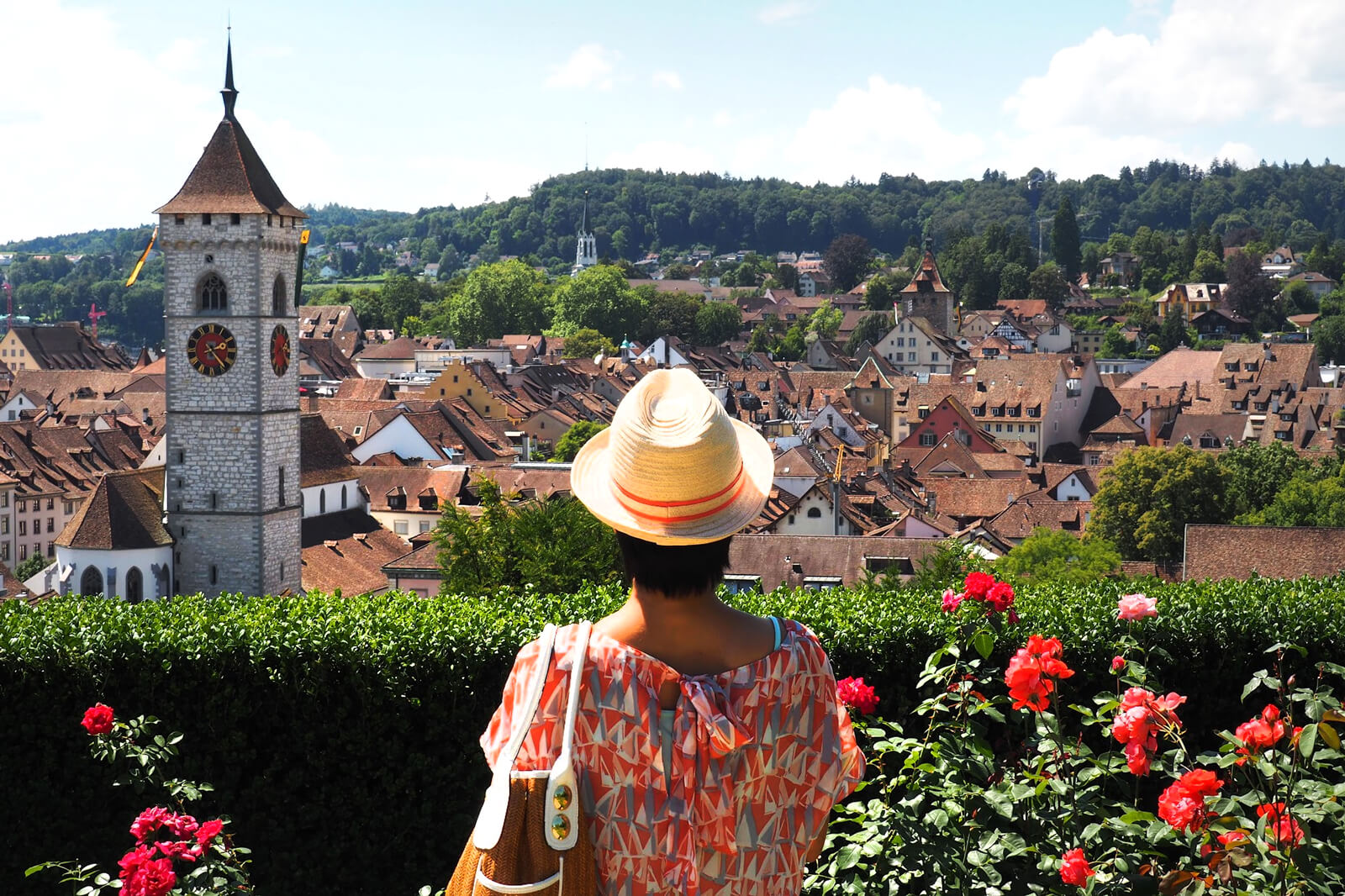
Switzerland’s relationship with time goes beyond time zones. It influences train departures, business meetings, restaurant reservations, lake cruises and even when the mountain light is best for photographs. In the same country where Einstein once worked at the Bern patent office, time (and punctuality!) is not taken lightly.
Learning to Read Time the Swiss Way
My first real watch was a Flik Flak. It was the classic model with blue wrist band, clear numbers, and those playful hands that would only make sense to a child. I learned to read the time sitting next to my grandmother, tracing the hour hand and the minute hand with my finger until the pattern clicked.
That small Swiss children’s watch did more than tell me the hour. It gave me independence.
I suddenly knew when the bus would arrive. I knew when my friends were supposed to show up. I did not have to ask adults anymore. Time became something I could manage on my own.
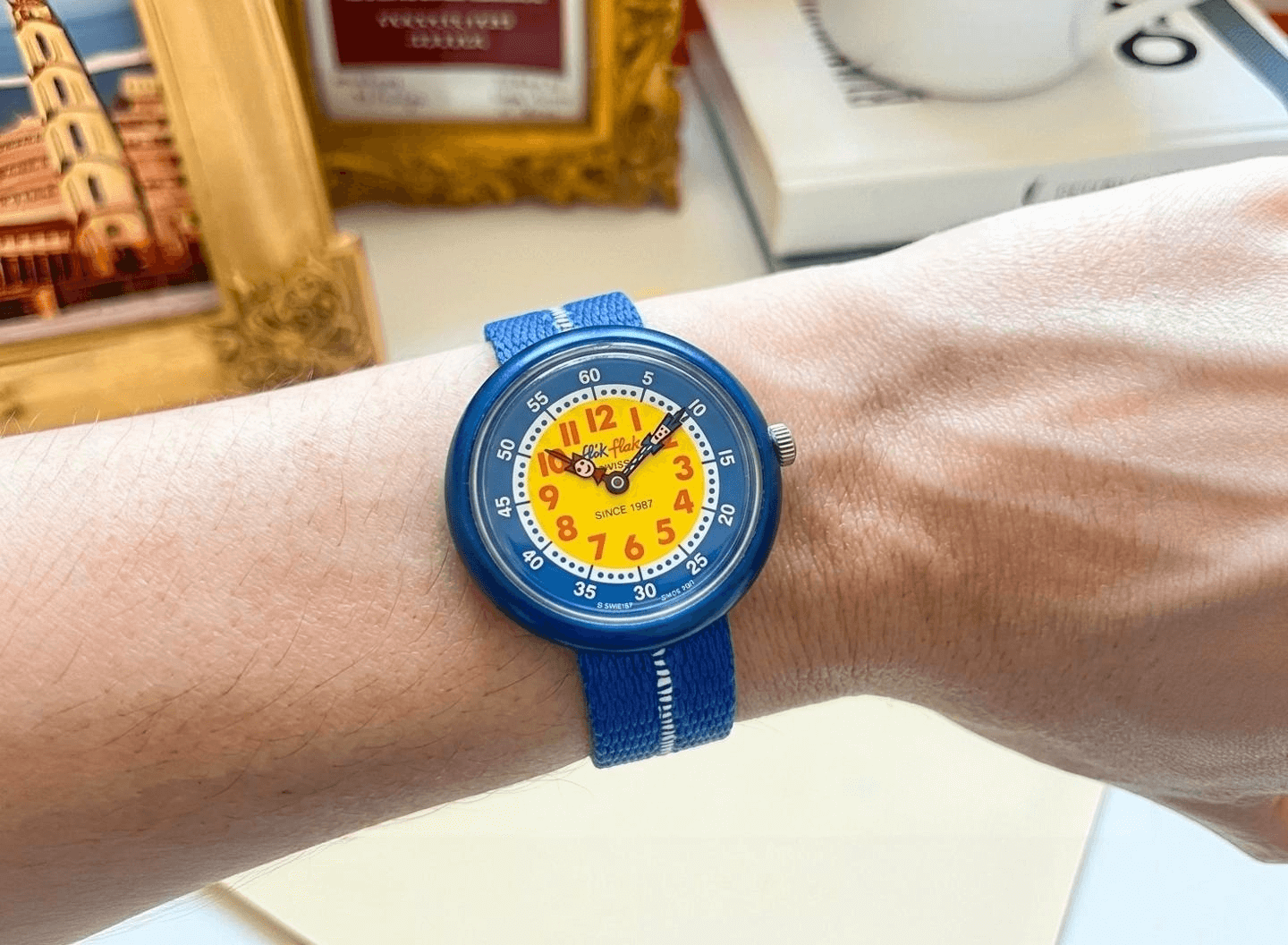
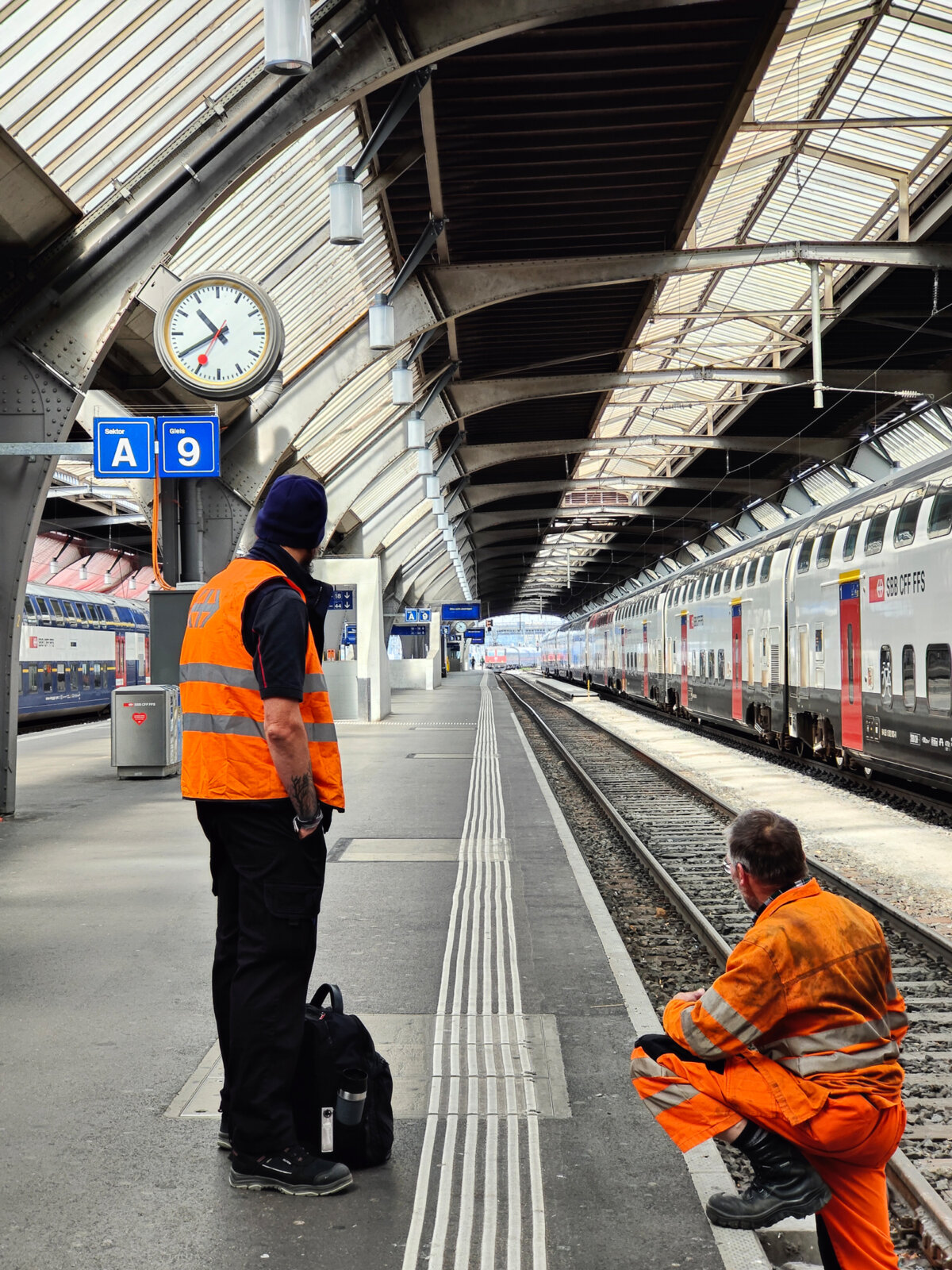
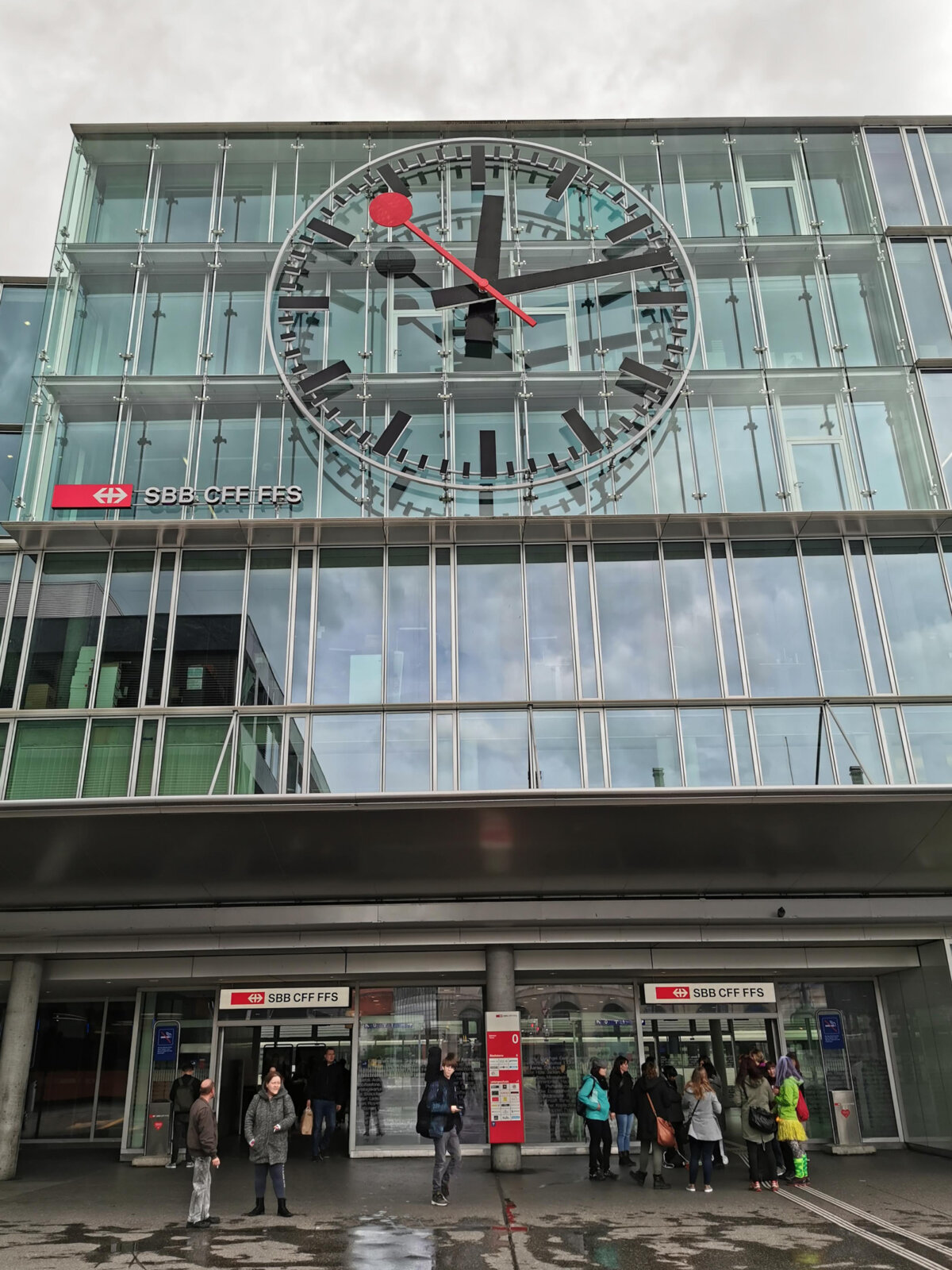
As I would soon find out, watches are everywhere in Switzerland. They hang from railway stations, church towers and school buildings. They are precise, quiet, and part of everyday life from early on.
Switzerland’s Time Zone: CET and CEST
Switzerland operates on Central European Time in winter. That places us one hour ahead of Coordinated Universal Time.
When daylight saving begins in spring, Switzerland shifts to Central European Summer Time and moves two hours ahead of UTC.
This system aligns Switzerland with neighboring countries such as Germany, France, Austria and Italy. Cross-border trains, flights and business schedules remain synchronized throughout the year.
There is no regional variation. From Lake Geneva in the west to St. Gallen in the east, the clock remains identical.
When Do Clocks Change in Switzerland?
Daylight saving time follows a predictable European rhythm.
In March, on the last Sunday of the month, clocks move forward by one hour during the night. Evenings become longer and daylight stretches well past 9 pm in early summer.
In October, again on the last Sunday of the month, clocks move back by one hour. Mornings become brighter, while sunset arrives earlier.
For travelers and expats, this seasonal shift is often more noticeable than the time zone itself. It affects sunrise hikes, dinner reservations, and how late lakefront promenades stay lively.
Is the Time the Same in Zurich and Geneva?
Yes. Switzerland has one unified time zone.
Zurich, Geneva, Bern, Basel and every other Swiss town follow the same national clock. There are no regional differences, no internal time shifts, and no hidden local variations. From Lake Geneva to Lake Constance, the minute hand moves in sync.
That said, Switzerland occasionally plays with time in more creative ways. In Solothurn, a city famous for its deep affection for the number eleven, you will find a clock that shows only eleven hours instead of twelve.
It is not a technical error but rather a quiet tribute to the city’s long-standing connection with the number eleven, which appears throughout its churches, fountains and historic landmarks. Even time, at least symbolically, bends slightly to local tradition there.
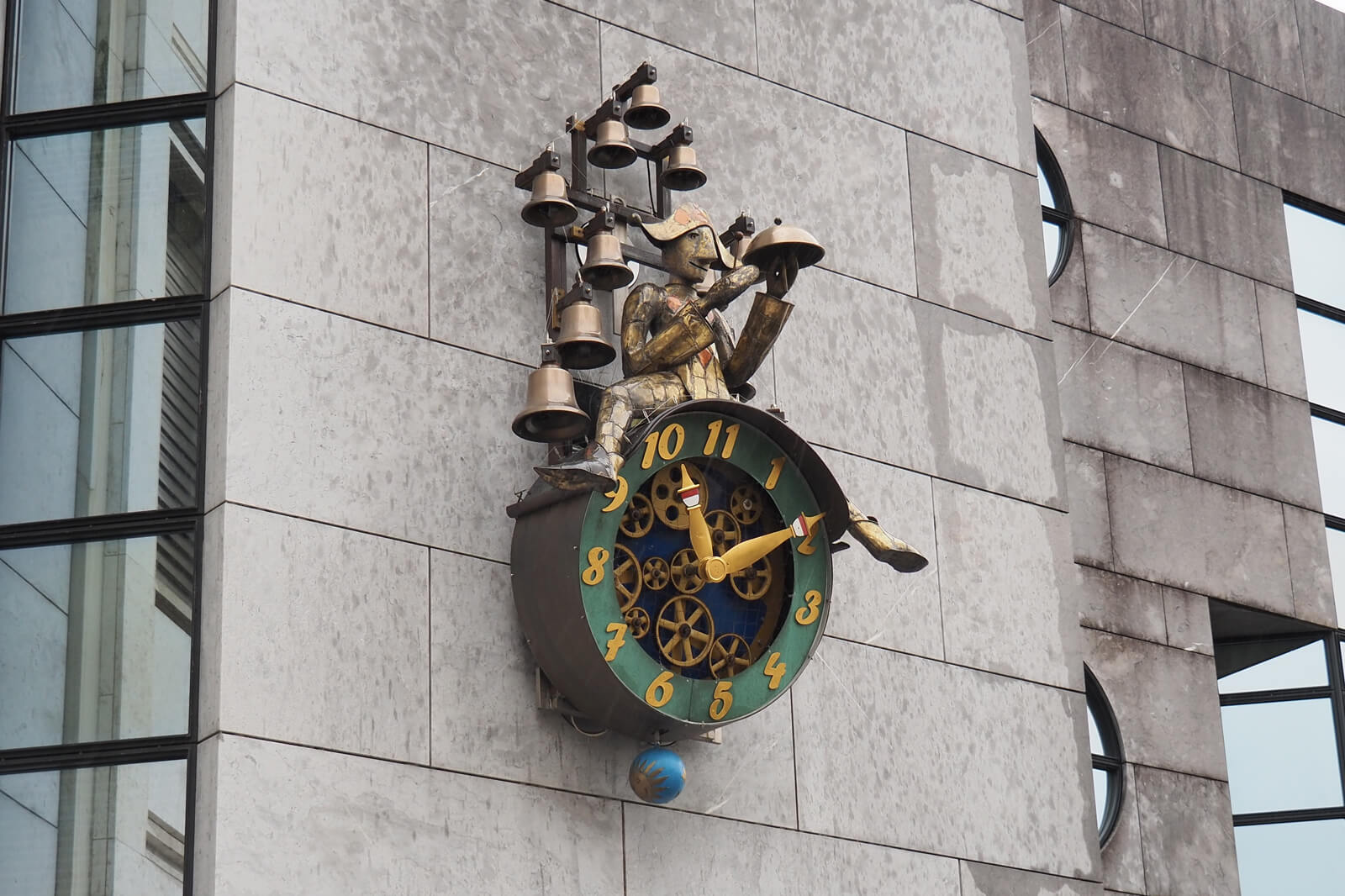
If you are curious about Solothurn’s much deeper relationship with the number eleven, you can explore it in detail in our dedicated getaway guide.
So, while Switzerland officially shares one precise time zone, you may still encounter the occasional reminder that tradition sometimes has its own rhythm...
And if you are specifically looking for a city reference, you can check our detailed guides:
Sunrise and Sunset in Switzerland
Daylight varies dramatically throughout the year. In June, sunrise can occur shortly after 5:30 AM, with sunset approaching 9:30 PM in Zurich and Geneva. In December, daylight shrinks to 8.5 hours. (Source: MeteoSwiss)
Mountain regions experience the same official time but different light exposure depending on altitude and valley position. Winter shadows linger longer in alpine villages, while lake cities often receive softer evening light.
If you plan scenic train rides or want to visit panoramic viewpoints, the hour of daytime matters as much as the time of year.
Why Knowing the Current Time in Switzerland Matters
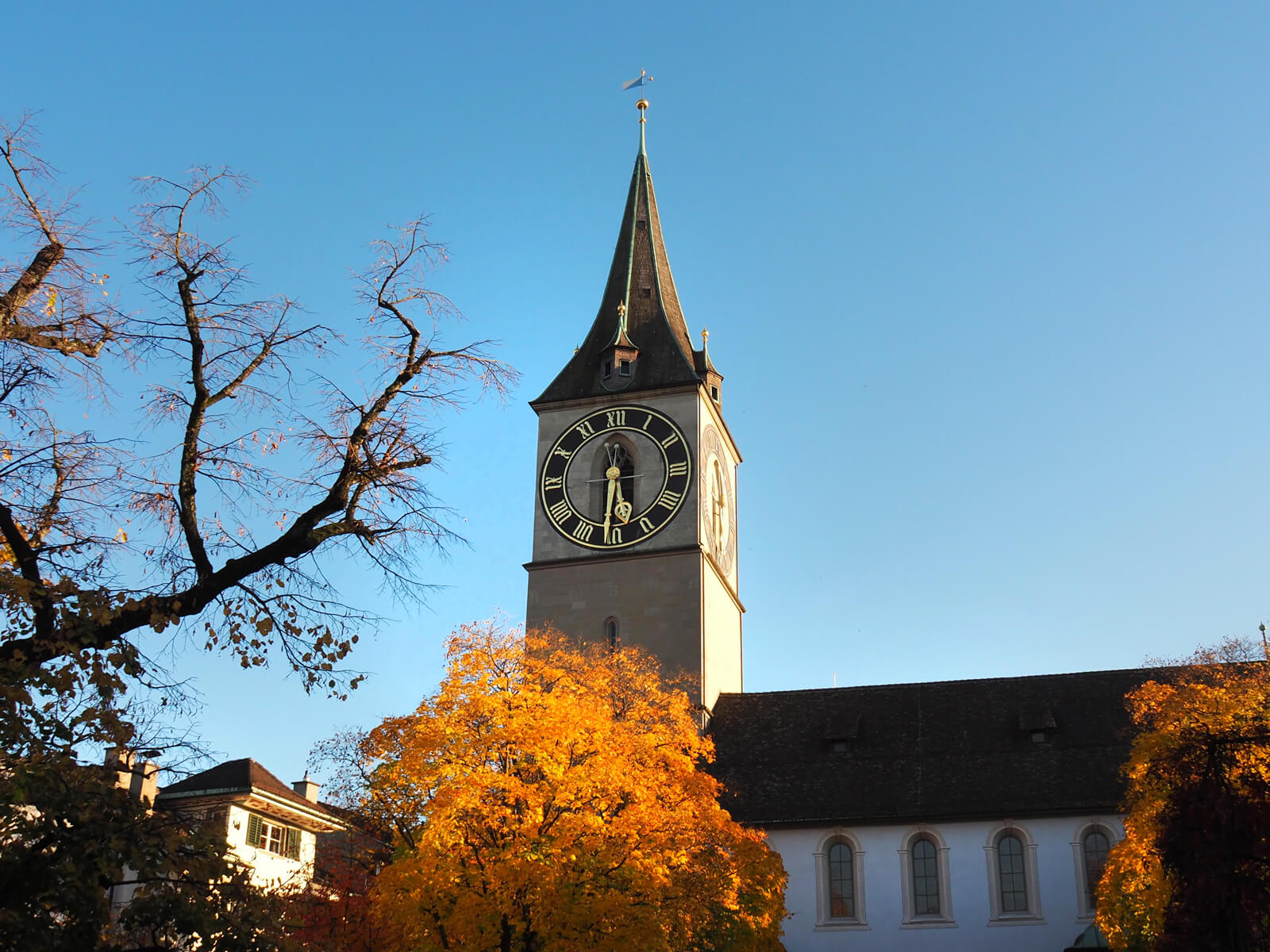
Switzerland’s public transport network is famous for punctuality. Trains depart precisely on schedule, often to the minute. Connections between trains, buses and boats are carefully coordinated.
Business culture is equally precise. Meetings typically begin exactly as scheduled. And arriving five minutes early is common practice as wasting someone's time is considered rude.
For visitors, knowing the correct local time prevents missed departures and awkward arrivals. For remote workers or international teams, understanding Switzerland’s CET and CEST system ensures smooth scheduling across continents.
Time Differences Between Switzerland and Other Countries
During standard winter time:
- Switzerland is one hour ahead of London
- Six hours ahead of New York
- Nine hours behind Tokyo
During summer time:
- Two hours ahead of London
- Six hours ahead of New York
- Seven hours behind Tokyo
These differences shift when other countries change clocks on slightly different dates, so short transitional periods in March and October can create temporary variations.
Frequently Asked Questions About Time in Switzerland
Switzerland handles time the way it handles most things: without drama. The clock changes twice a year, trains run when they say they will, and people show up when they promised.
I still remember sitting at the kitchen table with my Flik Flak, trying to understand why the small hand moved so slowly. The day I could read it on my own felt like I leveled up. Finally, I knew when the bus was coming. I knew how long I had to wait for my friends...
Maybe that's what knowing the current time in Switzerland really comes down to. Not the mechanics of CET or CEST, but the small confidence that comes with understanding the rhythm around you.


 admin
admin
 Eva
Eva
 Danielle Parla