

 Dimitri Burkhard
Picture this: you're standing on skis, gripping a tow rope, and a powerful horse launches forward across a frozen alpine lake... Welcome to skijoring, one of Switzerland's most thrilling and underrated winter sports.
The organizers of the White Turf horse races in St. Moritz called upon us to take one for the team: they would arrange for a trial lesson of skijoring with a local legend. Without hesitation, we jumped on this opportunity, packed our ski gear, and ventured onto the frozen Lake St. Moritz.
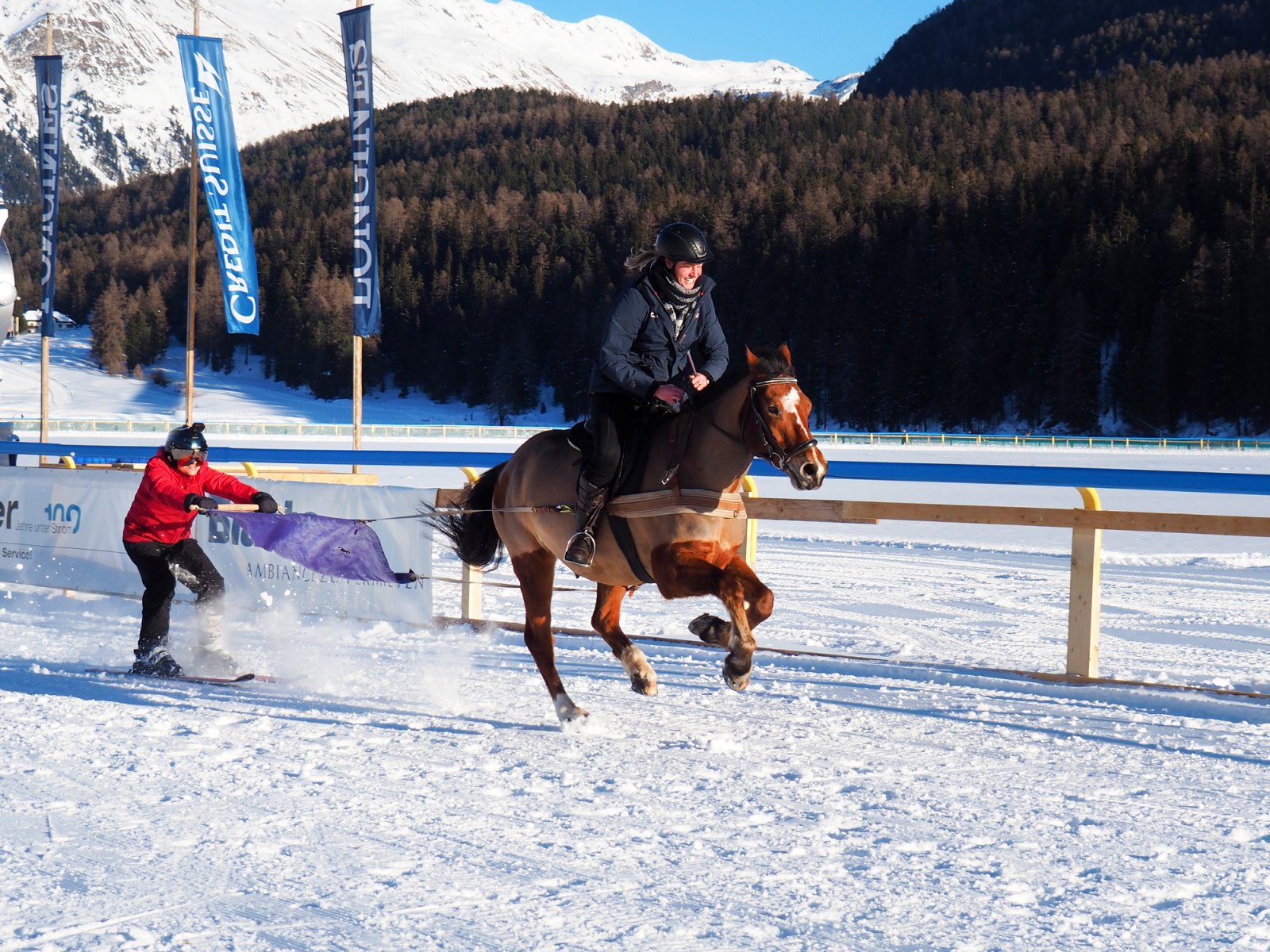
What Exactly Is Skijoring?
Skijoring is a winter sport in which a person on skis is pulled by a horse, a dog, or sometimes a motor vehicle across snow or ice. It's a type of recreational sport usually played in winter, combining the thrill of skiing with the raw power of an animal.
There are two types of skijoring: with or without a rider on the horse. In the riderless version, which is the style most famously practiced in Switzerland, the skier handles their own horse directly via long reins while being towed on skis. In the mounted version, a rider controls the horse while the skier holds on behind.
Another fun fact: Skijoring is particularly popular in Poland and Switzerland, as well as in Colorado, Wyoming, and Montana in the United States.
But nowhere in the world is it practiced with quite the same glamour and alpine drama as in St. Moritz, Switzerland.
A Brief History of Skijoring in Switzerland
Skijoring has deep roots in Scandinavia, where it was long considered the most practical mode of winter transportation. Horses and reindeer would pull people on skis across frozen landscapes long before it became a competitive sport. Switzerland's connection to skijoring dates back to the early 20th century.
The first-ever skijoring race took place in the Engadine valley in 1906. In one-minute intervals, the participants would launch onto the 10k track between St. Moritz to Champfèr. Due to the popularity of this newfound sport, races were moved onto a prepared track on the frozen Lake St. Moritz the following year.
The sport gained international attention when skijoring was featured as a demonstration sport at the 1928 Winter Olympics in St. Moritz, Switzerland. During those Games, athletes were pulled along behind horses on the frozen lake, a spectacle that captivated audiences from around the world
At the time, skijoring was not recognized as a medal sport despite its local tradition. However, it was accepted as an Olympic demonstration sport with a single performance on Feb 12, 1928.
An interesting fact: The Norwegian name, skikjøring, which literally means "ski driving", was slightly amended. And that's how the Swiss version of skijöring was born.
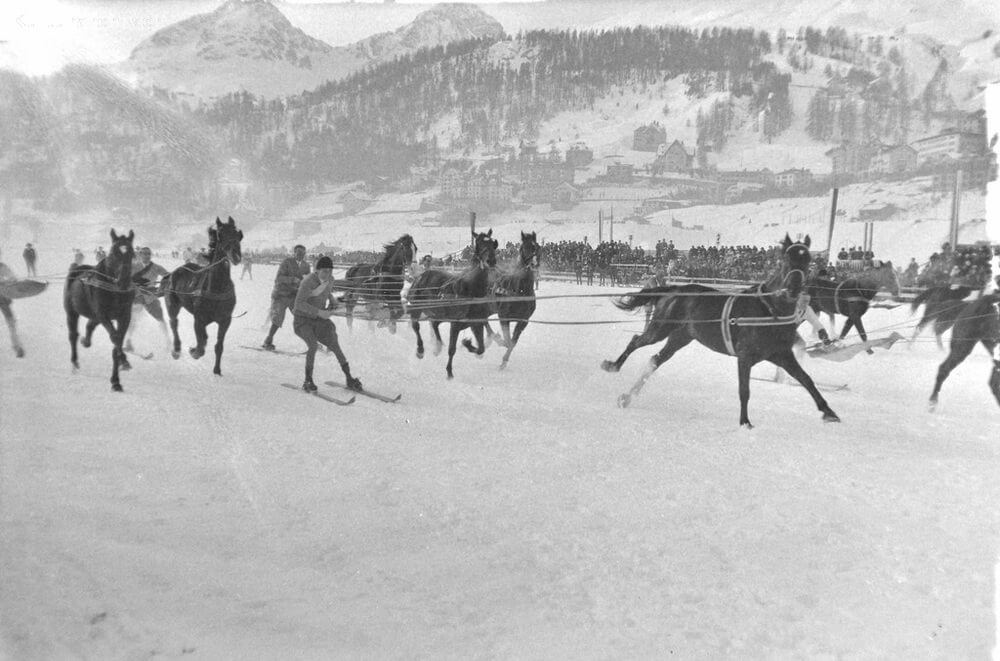
Through the 1930s, only men with horseback experience were allowed into the sport. In 1983, the first woman competed in a race (yet without crossing the finish line.) And since 2009, a new female contender has been whisking up the races: Valeria Holinger.
Back at the beginning of skijoring, skiing skills were considered less important. Yet with today’s horses going at speeds up to 50 km/h, skiing skills are essential - as are athletic condition, good balance, and a fair amount of instinct.
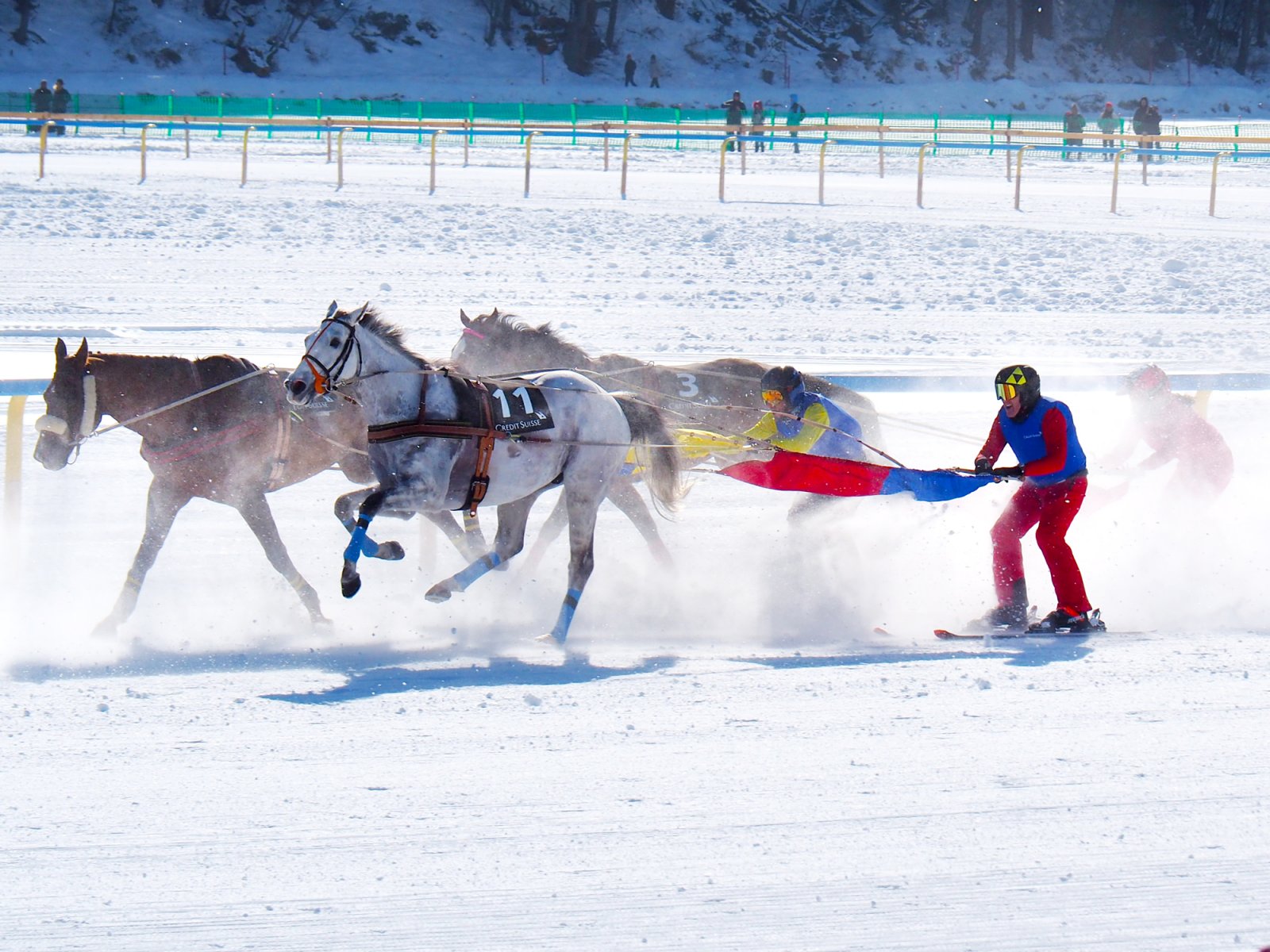
There are two types of skijoring: with or without a rider.
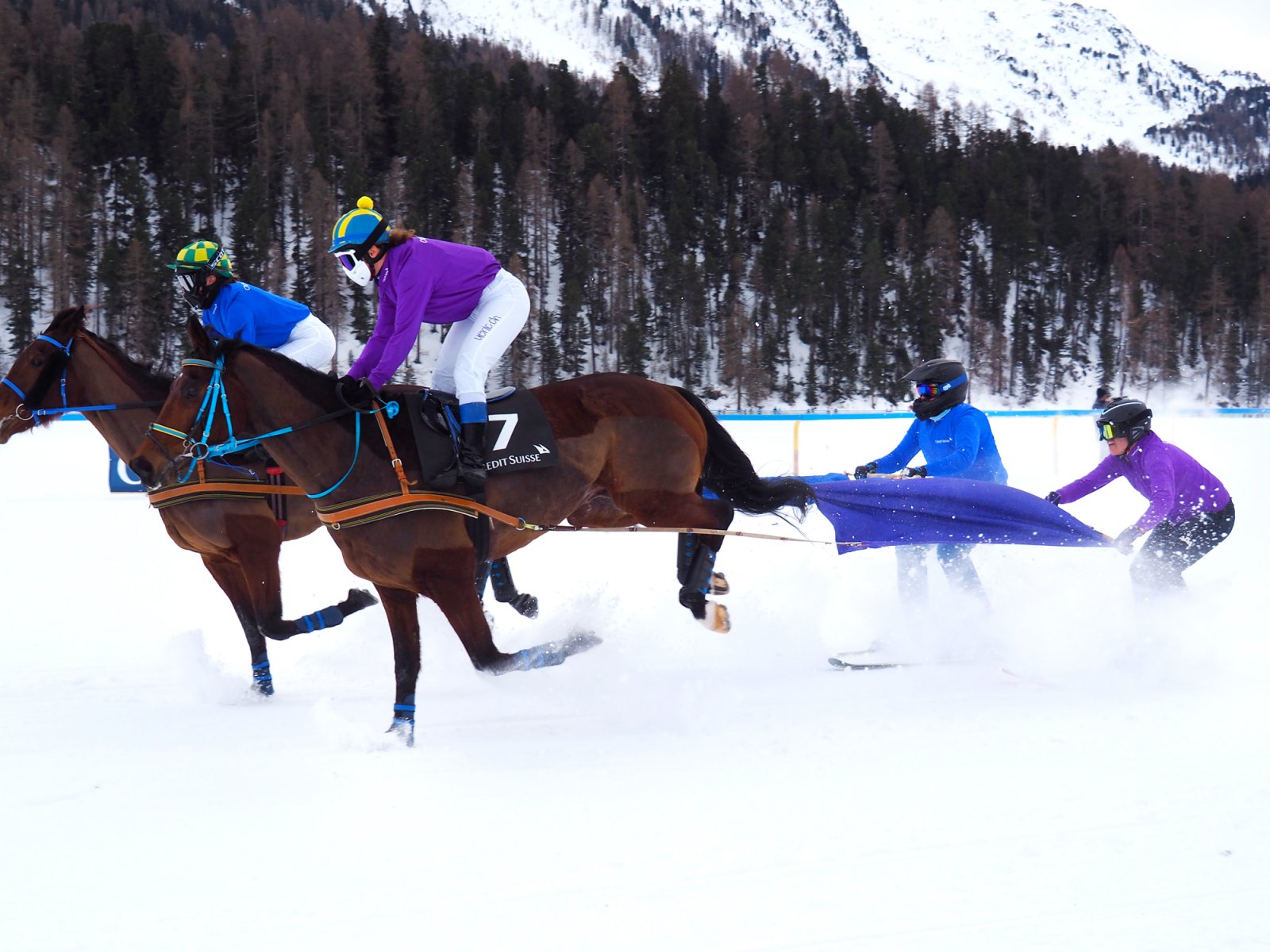
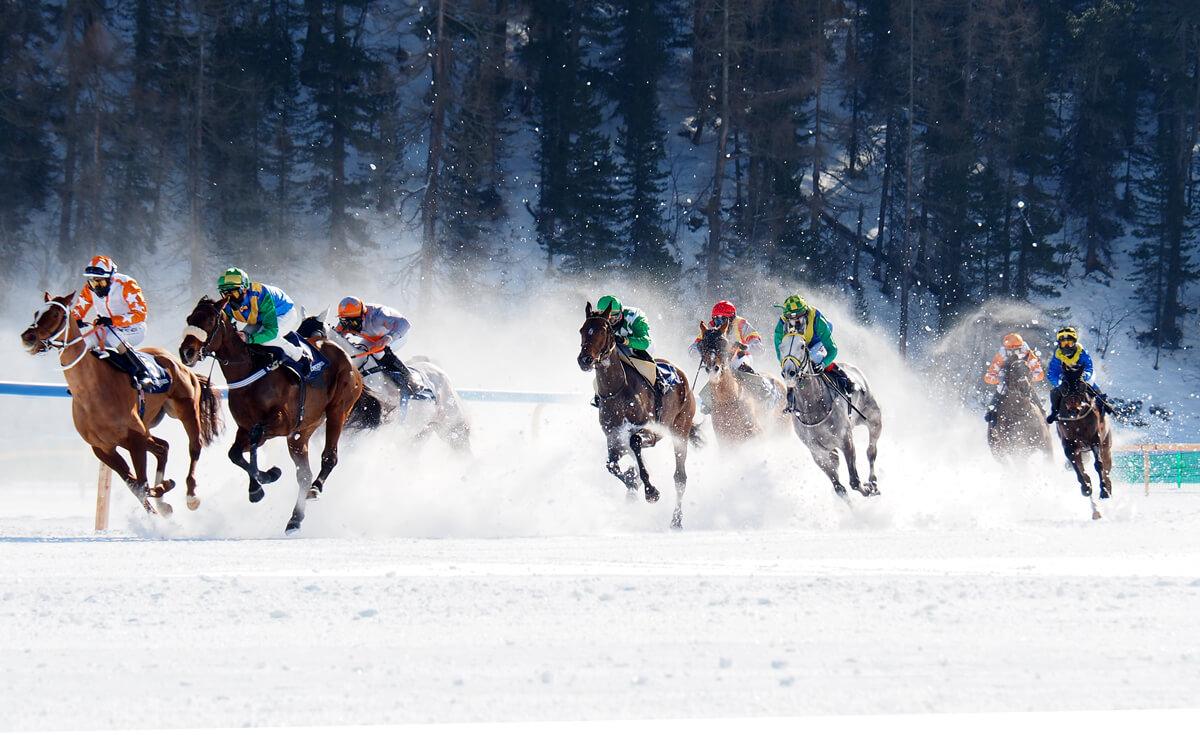
Races at the annual White Turf are typically held without a rider whereby the skier handles their own horse. Several horses compete for the best time as they race along the 1750-meter-track. Since things tend to get tight, especially in the curves, skijoring races are reserved for experienced athletes.
Horses are fitted with a light harness and a sort of handlebar for the skier, similar to a waterskiing setup. During races, an additional fabric cover prevents snow and ice from hurting the skier. Race regulations demand colorful skis so that horses can recognize them.
In recent years, skijoring has gained popularity in North America. Destinations like Breckenridge, Colorado, now have tracks for skijoring. But unlike in St. Moritz, the American variant of skijoring includes obstacles with moguls and jumps.
What’s it like to be towed on skis by a horse at full speed?
It is the second weekend of White Turf, and our meeting point with Fredy Wolf is near the finish line on the frozen lake. Our only instruction was to bring our skis, ski boots, and helmets. So far, so good.
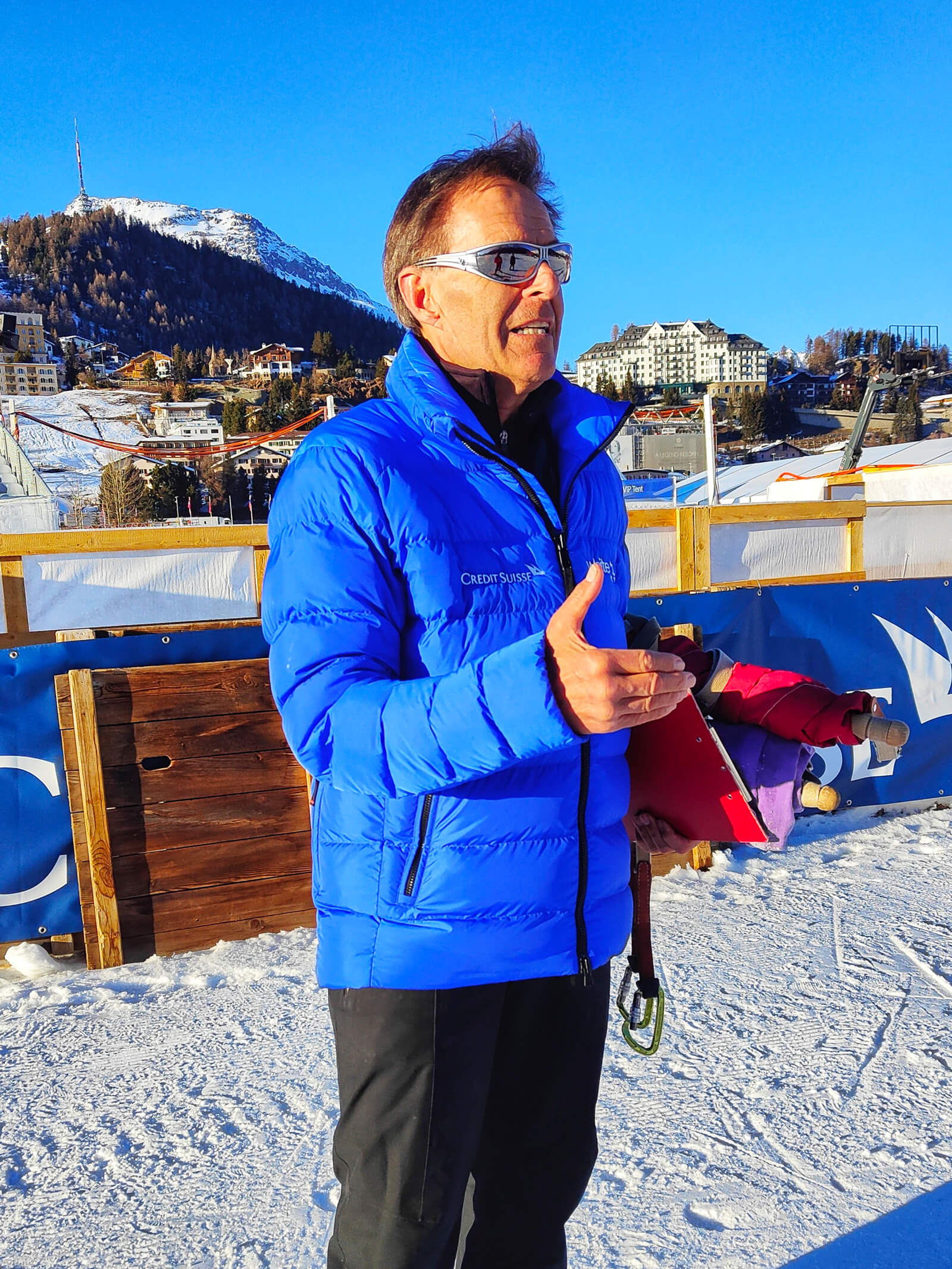
Fredy is a legend here in St. Moritz where he was born and raised. Everyone knows Fredy by his nickname, “Lupo”, the Italian term for wolf. Having won numerous skijoring prizes since 1988, Lupo never misses a competition.
Fredy is just wrapping up a skijoring session with another group, then turns his attention to us. Mamiko and I each get a horse with a rider. We feel relieved because we were worried about not having a rider…
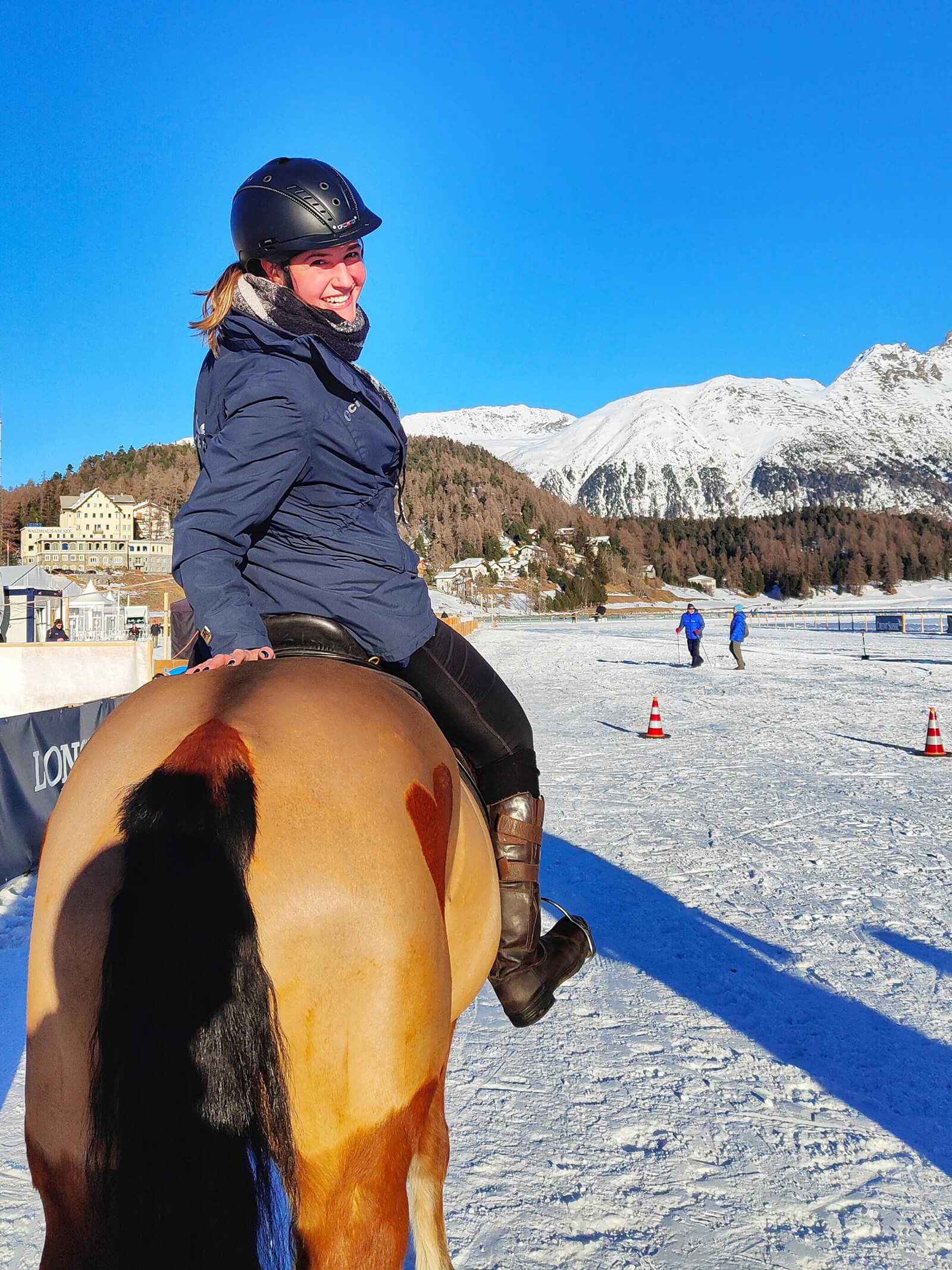
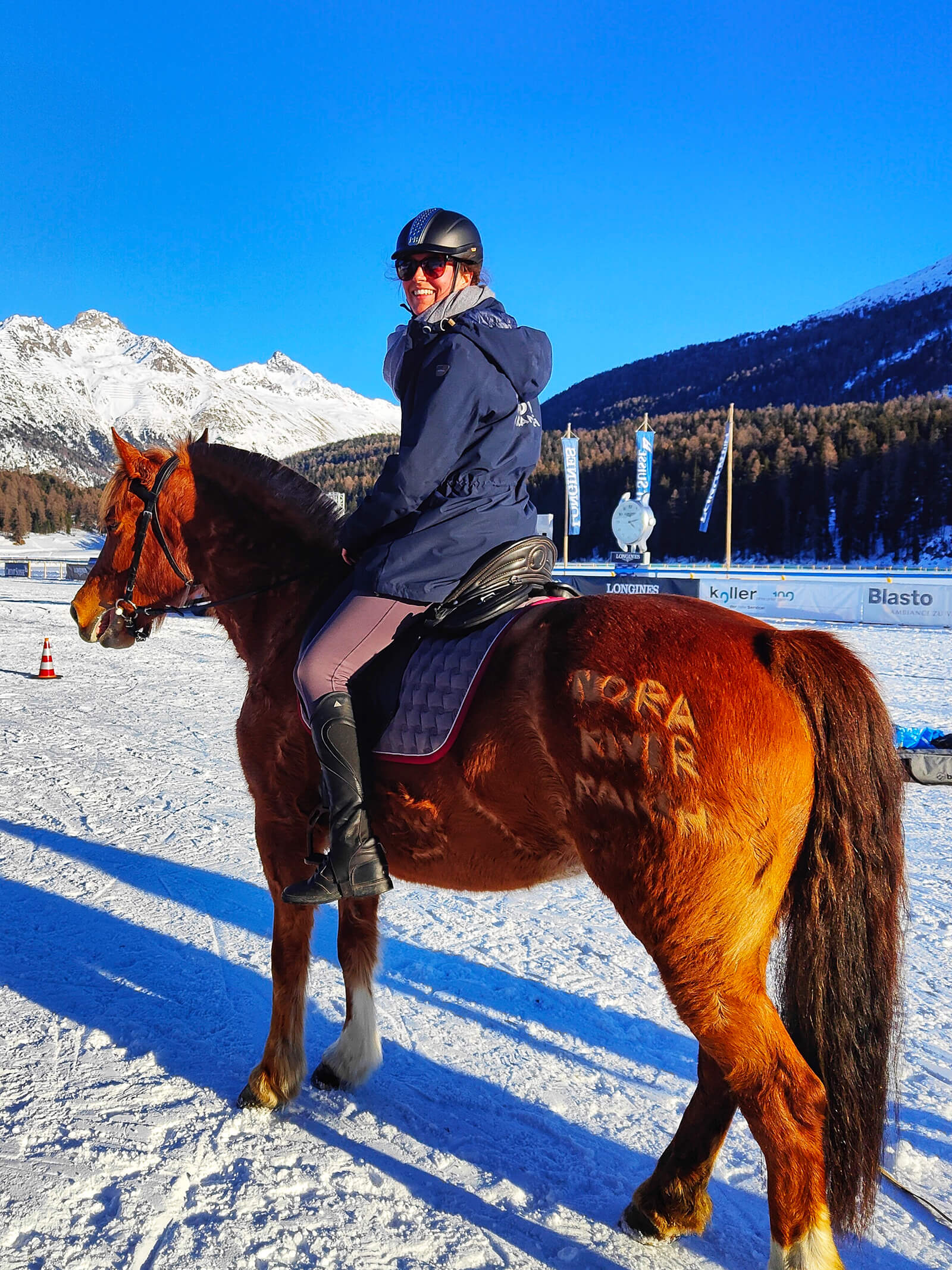
With skis mounted and harness in hand, we are technically ready to go. But a few critical questions remain unanswered: what to do in case of a fall? And how to break?
“Keep holding on to the handlebar, you will not fall. And for breaking, simply form a plowing V-shape with your skis. Also, try not to touch the horse’s butt with the harness - they don’t like that,” Lupo instructs us. Off we go!
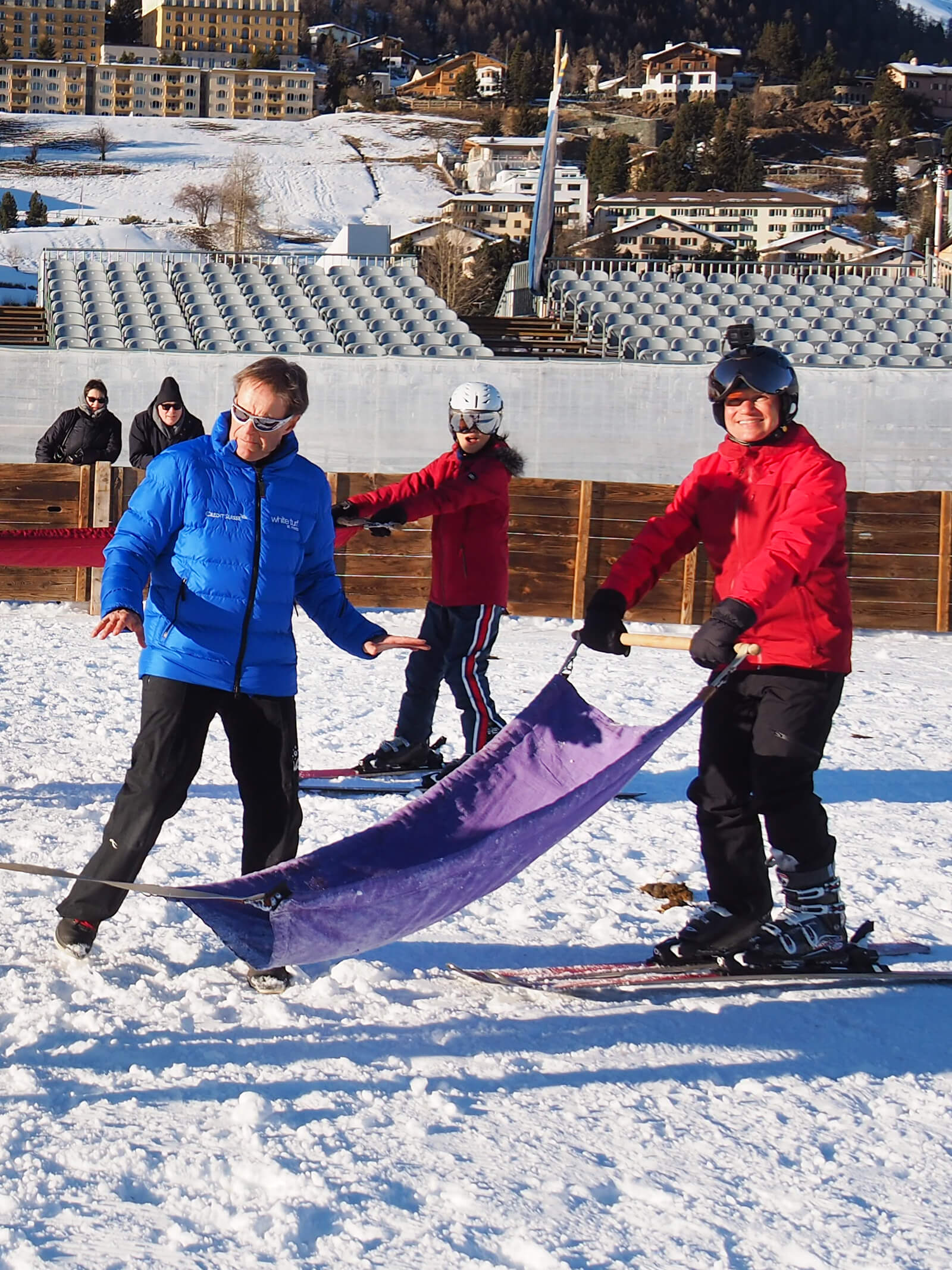
It is an indescribable feeling to be towed across the snow by the power of a thoroughbred.
The proximity to this powerful animal, the wind in my face, the mountain scenery… It all amounts to an experience I quickly add to my mental bucket list - just to tick it off the next moment. The closest analogy for skijoring would be riding a rapid, horizontal T-bar ski lift.
We quickly get the hang of it. Our horses accelerate from walking to trotting, from canter to gallop. And even when we zip past the finish line at full speed, we are begging for yet another go. There is no need to be scared or worried in skijoring for leisure - the only action required is to break.
We feel honored to have been instructed by a skijoring celebrity. Thank you, Lupo, for this memorable experience. And thank you, Nano and Nora, for towing us! Here's Lupo with #7 the following day:
Where to Try Skijoring in Switzerland
Skijoring with a rider is an ideal activity for skiers of all ages and skill levels. It could make for a fun team-building activity, but it is also appropriate for families with children. Really, the only requirement is a set of ski gear and basic skiing skills.
There are a few places to try out skijoring in Switzerland. Be aware that this activity is extremely seasonal as it requires wintry conditions.
St. Moritz
St. Moritz is the undisputed capital of skijoring in Switzerland. The frozen lake provides a dramatic natural arena. And the town's equestrian culture means there are horses and experienced handlers available throughout the winter season. Beyond the famous White Turf races, the above equestrian centers offer introductory skijoring experiences for people like you and me.
Engadin Valley
The broader Engadin Valley surrounding St. Moritz also offers opportunities for skijoring, both with horses and with sled dogs. The wide, flat valley floor and reliable snow cover make it ideal terrain for the sport.
Arosa & Lenzerheide
For those more interested in dog skijoring (being pulled by huskies), resorts like Flumserberg offer husky trekking and skijoring experiences. This is super fun - we've tried it ourselves at Glacier 3000.
White Turf St. Moritz is The Crown Jewel of Skijoring
The White Turf races is hands-down the most prestigious skijoring event in the world. Held annually on three consecutive Sundays in late January and February, the races take place directly on the frozen surface of Lake St. Moritz at an altitude of 1,768 meters.
Unlike what we have tried, races at the annual White Turf are typically held without a rider, whereby the skier handles their own horse. Several horses compete for the best time as they race along the 1,750-meter track.
The spectacle combines flat racing, trotting, and skijoring in a single event day, drawing thousands of spectators dressed in their finest winter attire.
What to expect at White Turf:
- Three Sundays of races, typically late January through mid-February
- Multiple race formats, from flat racing to trotting and, yes, skijoring!
- VIP hospitality tents and gourmet dining on the frozen lake
- Free general admission to the standing areas
- A glamorous social scene rivaling any European sporting event
For the latest dates and ticket information, visit the official White Turf website.
Ready To Get Started With Skijoring?
After everything you've learned so far, are you still game to try skijoring yourself? What makes skijoring truly special is the combination of animal partnership and skiing skill. Unlike any other winter sport, you're working with a living creature, reading its movements, and adapting in real time. It's part skiing, part equestrian sport, and entirely unforgettable.
Here's what you need to know before you clip into your bindings and grab that tow rope:
Equipment You'll Need
A Word About the Required Skill Level
You don't need to be an expert skier, but you should be comfortable on skis at an intermediate level. Consider that you'll need to be able to:
- Balance at varying speeds
- Handle turns and stops
- React quickly to changes in direction
- Stay relaxed when being pulled (tensing up leads to falls)
For horse skijoring, some basic understanding of horse behavior is helpful. Although, I had no prior experience with horses - and I ended up fine. For dog skijoring, the learning curve is gentler since the speeds are lower.
Some Final Safety Tips
- Always wear a helmet (non-negotiable)
- Start slow and let the horse or dog build speed gradually
- Never wrap the rope around your hands or body
- Learn to let go: If you lose balance, release the tow rope immediately
- Work with experienced handlers and never attempt horse skijoring without a knowledgeable horse person present.


 Alessandra
 admin
admin



Add comment