
 Dimitri Burkhard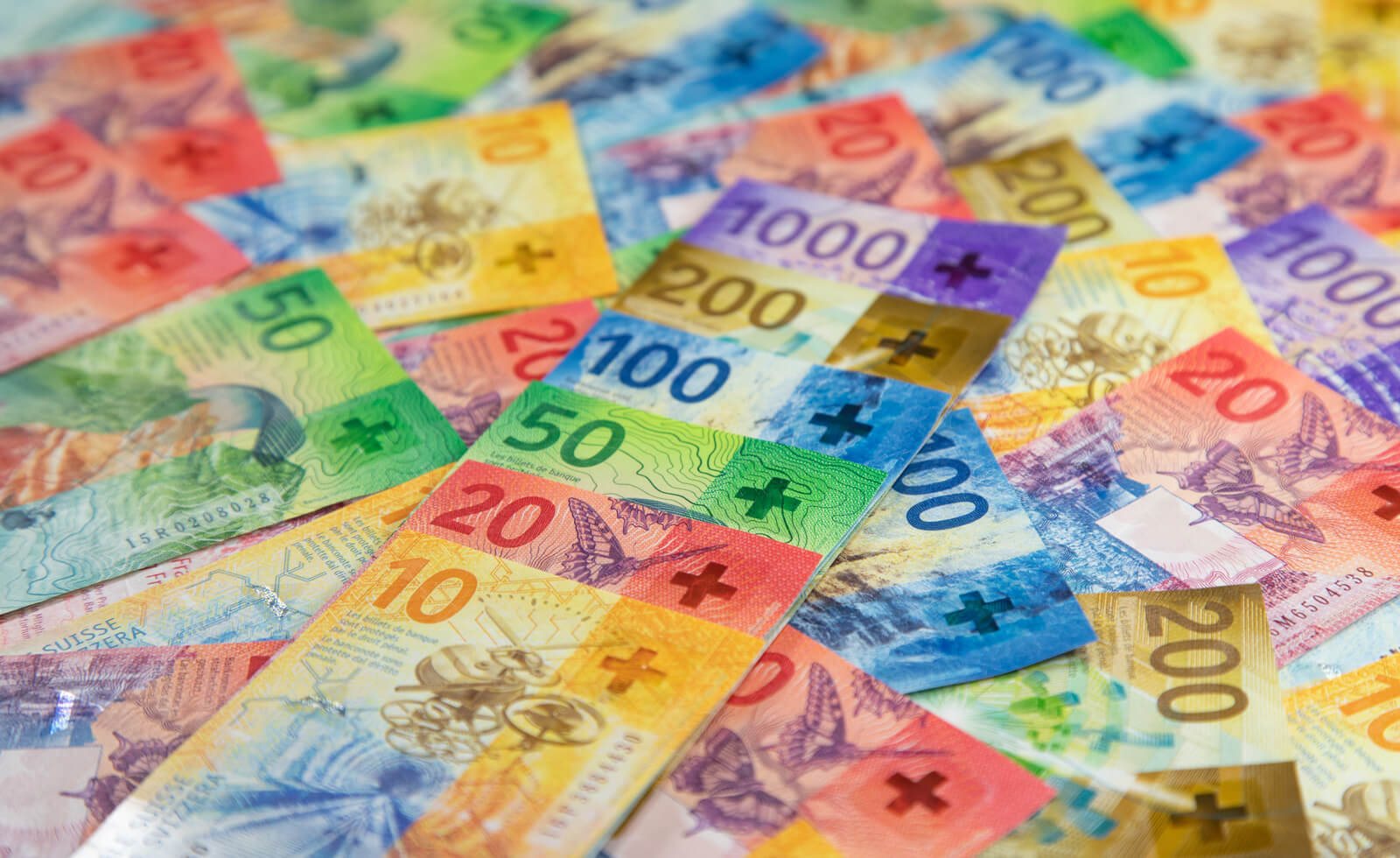
Switzerland is serious about its money. Not just in the financial sense, but in the physical sense, too.
The coins are actually quite heavy, and the banknotes are packed with hidden details. And this wouldn't be Switzerland if the entire monetary system had not been quietly, precisely maintained for over a century without much fuss...
Here are the facts, figures, and stories behind the francs and centimes in your pocket.
Seven Swiss Coins, Almost Unchanged for 150 Years
There are exactly seven Swiss coins in circulation. Their designs have not changed significantly since the 19th century as most were last redesigned between 1874 and 1931.
| Coin | Weight | Diameter | Last Redesign |
|---|---|---|---|
| 5 franc | 13.2g | 31.45mm | 1931 |
| 2 franc | 8.80g | 27.4mm | 1874 |
| 1 franc | 4.40g | 23.2mm | 1875 |
| ½ franc | 2.20g | 18.2mm | 1875 |
| 20 rappen | 4.0g | 21.05mm | 1881 |
| 10 rappen | 3.0g | 19.15mm | 1879 |
| 5 rappen | 1.80g | 17.15mm | 1879 |
Until 1967, the franc coins (½, 1, 2, and 5) were struck from silver. Since 1969, all have been made from cupronickel (75% copper, 25% nickel), the same alloy used for the 20 and 10 rappen.
The 5-rappen piece switched to 92% copper, 6% aluminium, and 2% nickel in 1981.
In a world where brands get redesigned every few years, a coin that looks exactly the same for 150 years is quite a statement, no?
The Five-Franc Coin: Not Wilhelm Tell
The Mystery of the Alpine Herdsman
The five-franc piece is called Fünfliber in Swiss German. It weighs 13.2 grams and measures 31.45mm across. Drop one on a table and it lands with a satisfying thunk. I have many memories about this large coin, going back all the way to my childhood.
And in this digital world with all its touchscreens, the Fünfliber is probably one of the most tactile coins in circulation in Switzerland.
Many people assume the hooded figure on the coin is Wilhelm Tell. But he is not!
The figure is an anonymous Alpine herdsman, created by sculptor Paul Burkhard. (No relation to yours truly.)
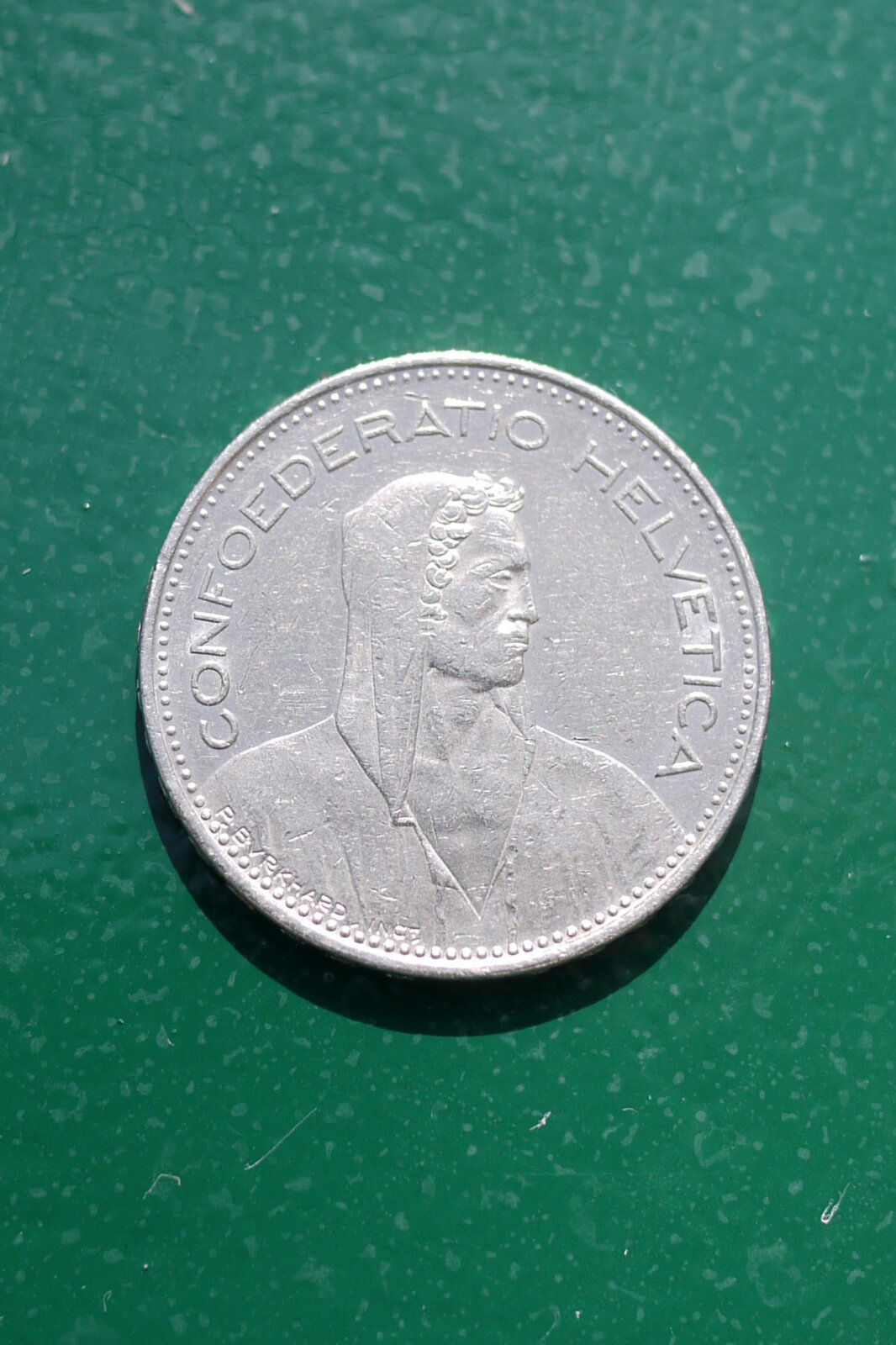
Coin aficionados have been speculating for decades about who Burkhard actually used as his model. The most frequently named candidates are:
- Jost Schillig (1864–1938), a district administrator from Bürglen
- Sepp Maria Planzer (1881–1964) from the Riedera valley near Bürglen
- Franz Betschart (1871–1949) from Ingenbohl
Which of the three can claim the honor will probably remain a mystery forever...
The edge of the coin carries the Latin inscription DOMINUS PROVIDEBIT ("The Lord will provide") along with 13 stars representing the original Swiss cantons. And get this: The design has been essentially unchanged since 1931.
The Two-Franc Coin: Helvetia Stands Up
The two-franc coin carries Helvetia, the symbolic guardian that often embodies Switzerland.
When the first federal coins were issued after the founding of the modern Swiss Confederation in 1848, she appeared seated. From 1874 onward, she was depicted standing.
It's hard not to read something into this change. Perhaps that a new confederation first sits, then rises as it develops?
The standing Helvetia has appeared on Swiss coins for over 150 years. By now, she is so familiar that many of us stopped noticing her.
The Goldvreneli: Who Was the Model?
The gold coin known as the Goldvreneli carries a young woman's face. Just like with the five-franc coin, the identity of the model has been debated almost as long as the coin has existed.
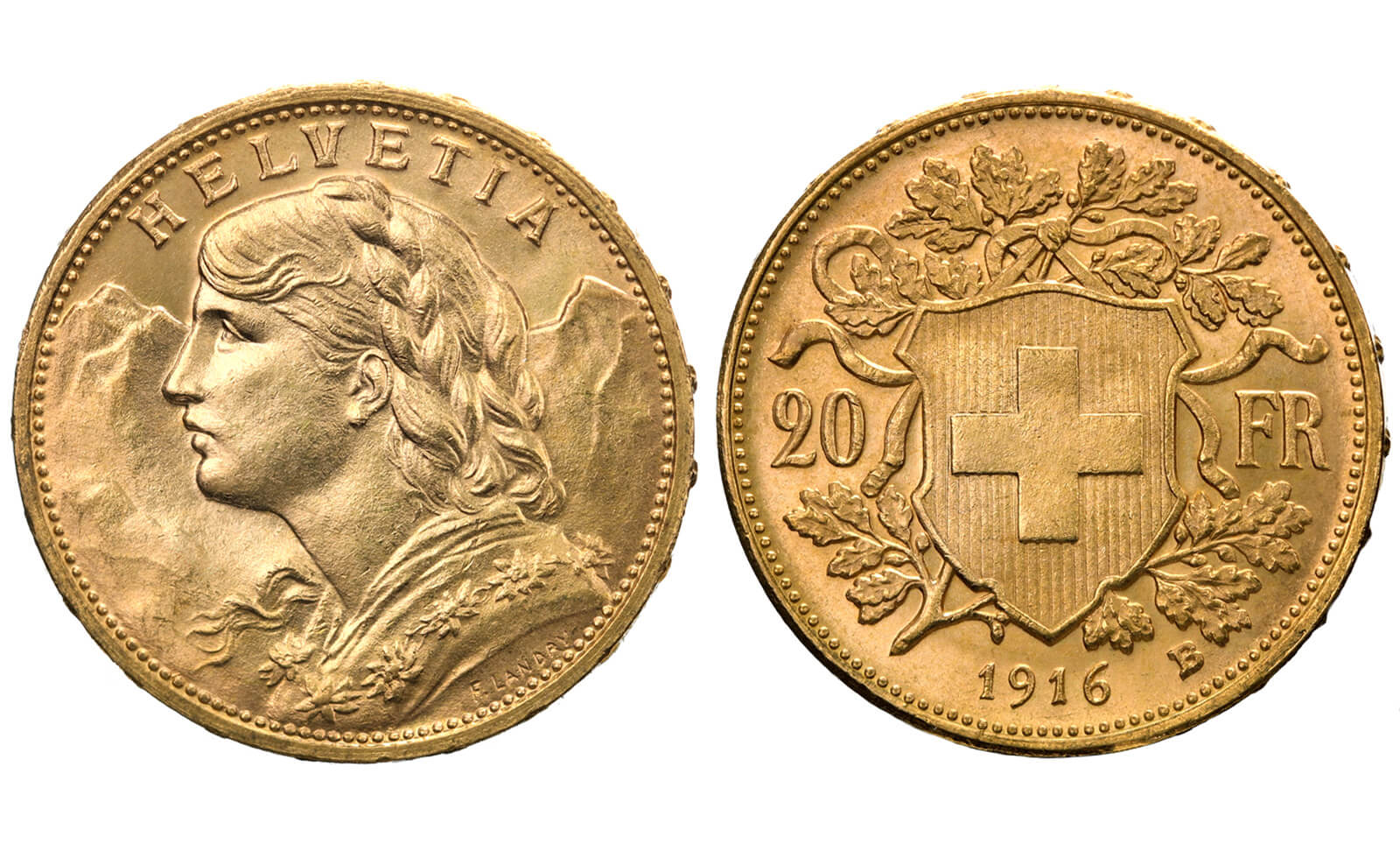
The sculptor was Neuchâtel-based Fritz-Ulysse Landry. Two men each claimed their late mothers had posed for his youthful Helvetia. I researched this and based on documentary evidence, the more credible candidate is Rosa Tännler (1878–1946) from Gadmen in the Oberhasli.
That's because in a letter to Federal Councillor Hauser, Landry himself mentioned studying "un type de femme très pur du Hasli" for his revised design.
I've got an interesting fact for you: Before the coin could enter circulation in 1897, a Swiss magistrate demanded that a protruding lock of hair on the girl's forehead be removed. Apparently, it gave her "a frivolous appearance."
The endearing name Goldvreneli likely came from the public, and was first recorded in writing only in 1943. As for me, I wish I had bought my very own Goldvreneli before gold prices surged as of late...
Swiss Banknotes: Nine Series Since 1907
Switzerland has issued nine complete banknote series since 1907. Each one reflects the design thinking and security technology of its time. Unlike coins, banknotes are updated regularly.
The typical lifespan of a Swiss banknote series is 15 to 20 years.
And the production costs depend on the denomination and the production volume. On average, a bill costs about CHF 0.40.
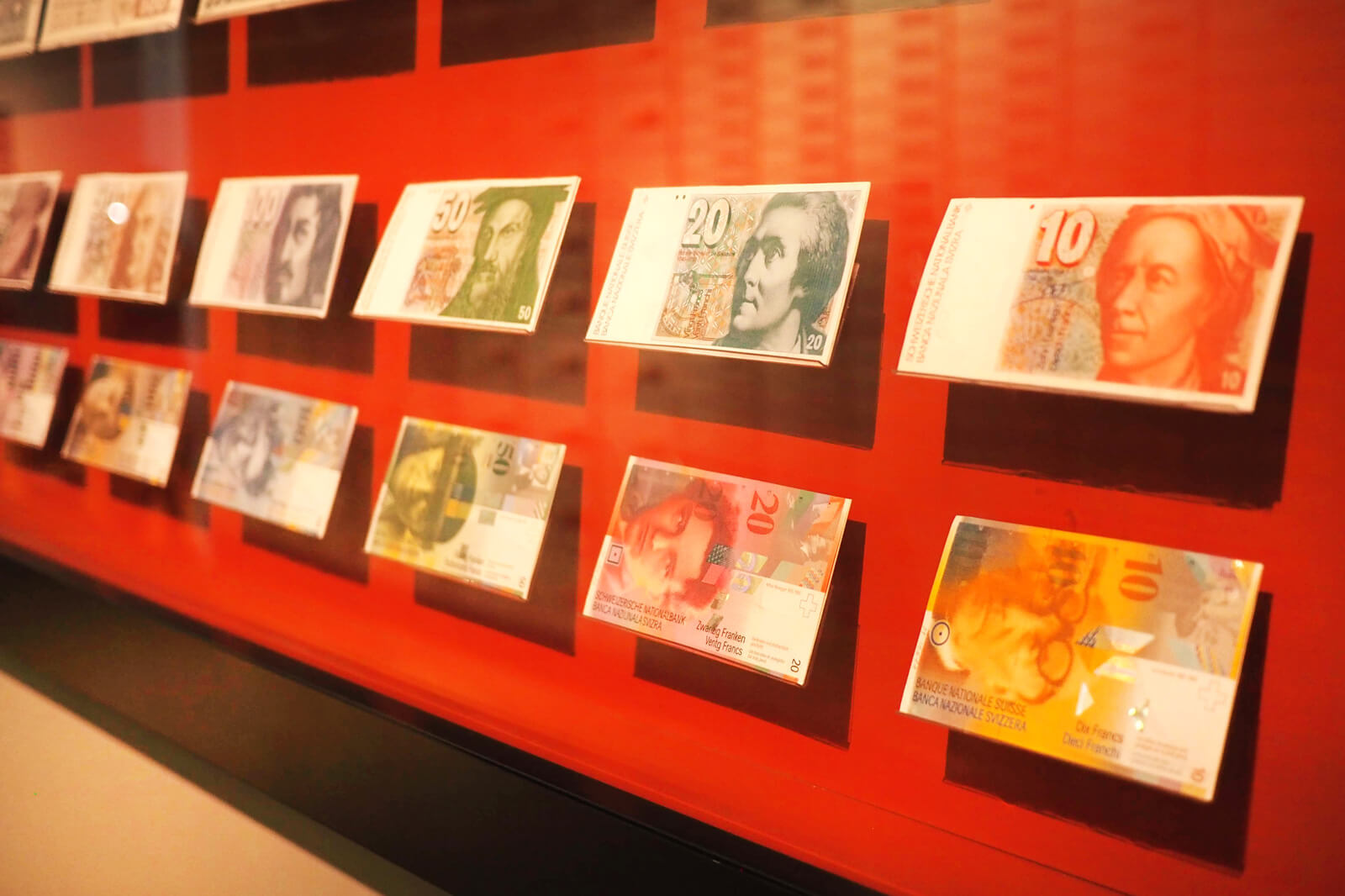
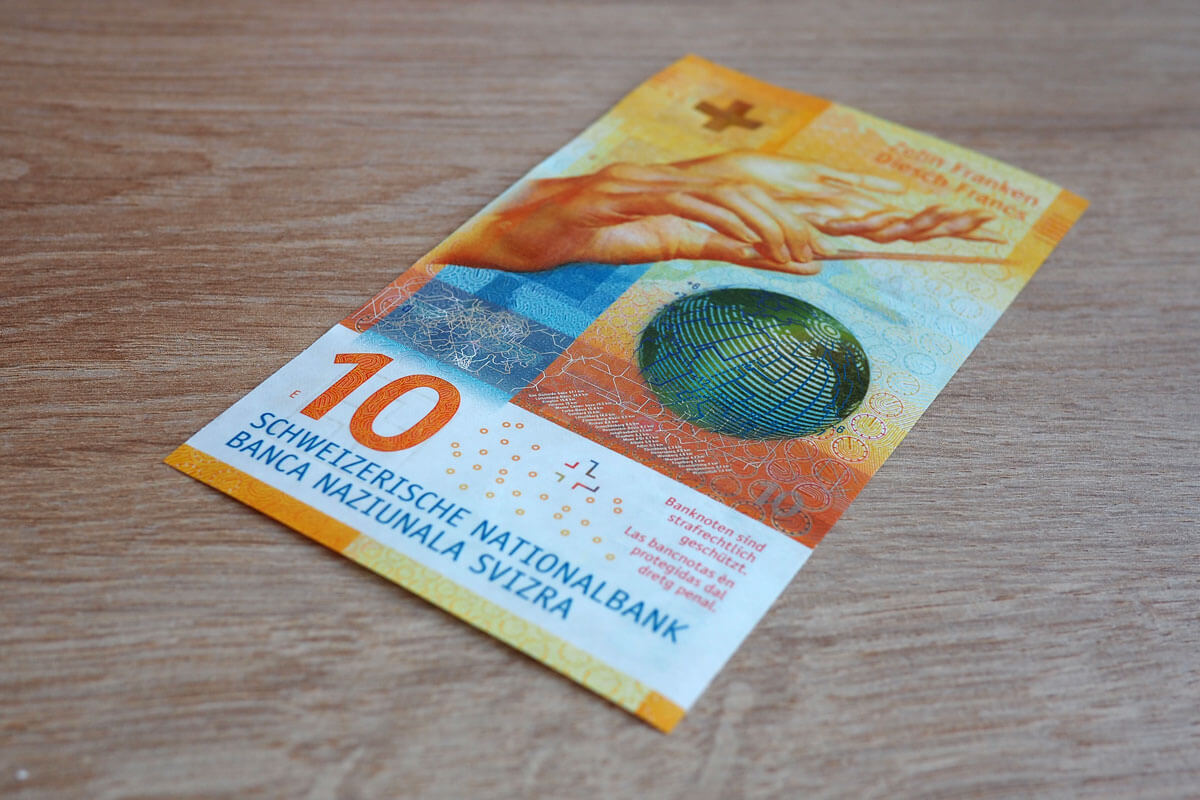
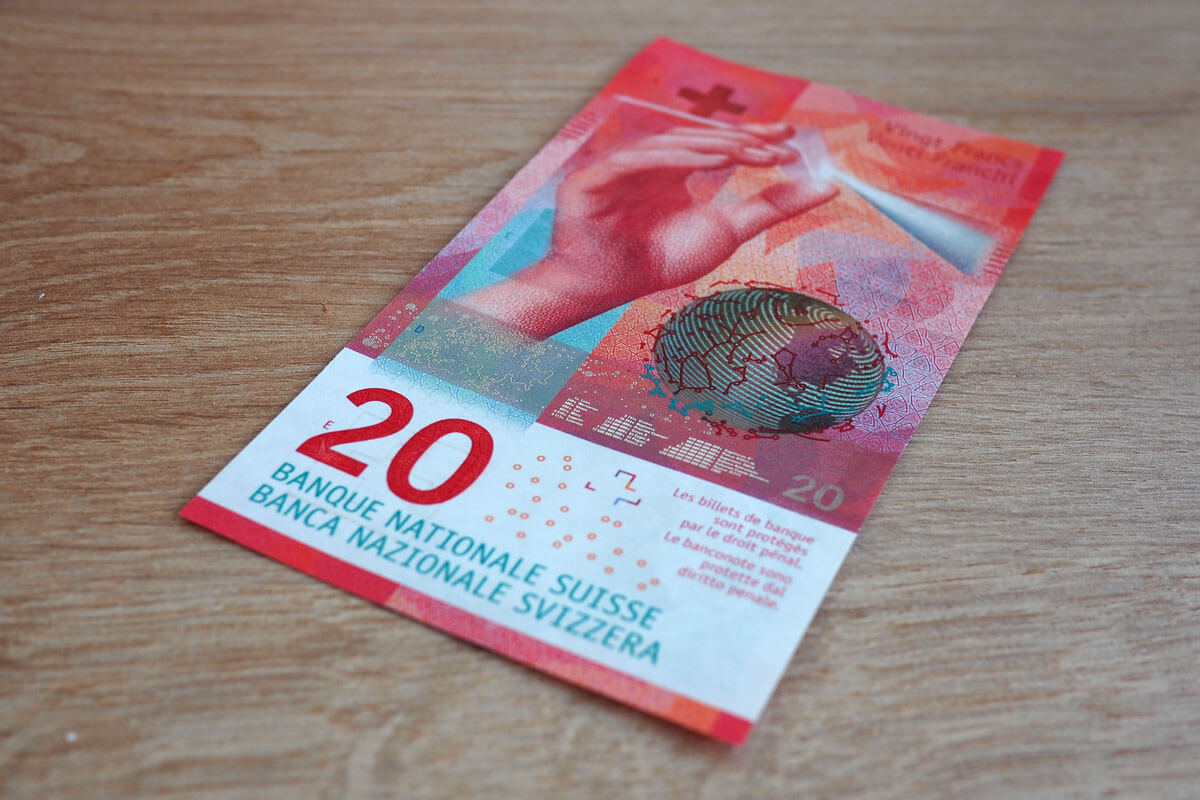
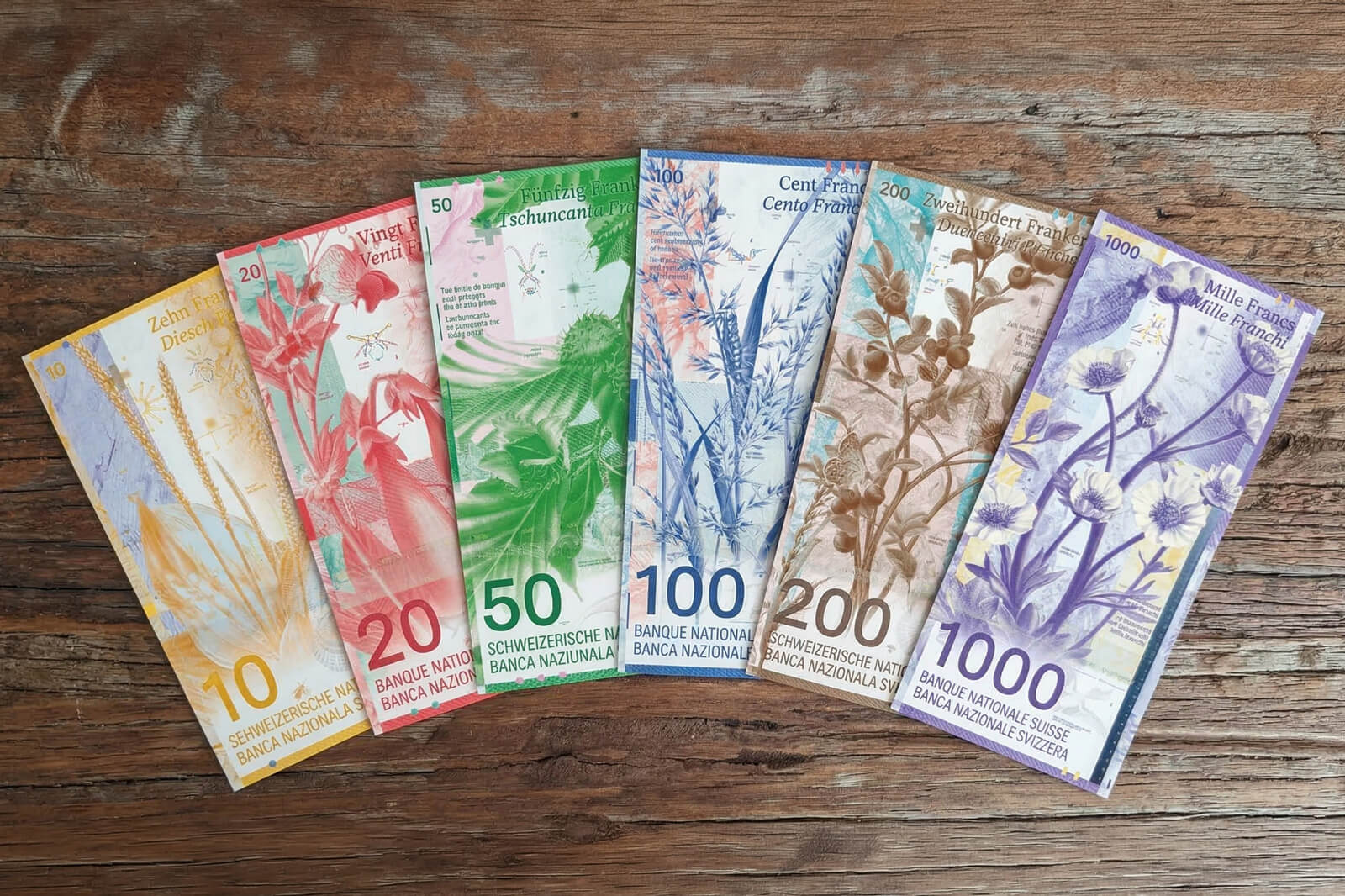
The current ninth series, designed by Zurich graphic artist Manuela Pfrunder, launched between 2016 and 2019. It moved away from portraits entirely and used quite abstract imagery: Hands, globes, rays of light, concepts like time, creativity, and wind.
"The 10-franc note focuses on Switzerland’s organisational talent – expressed by time, the note’s key motif." (SNB)
"The 20-franc note focuses on Switzerland’s creativity – expressed by light, the note's key motif." (SNB)
"The 50-franc note focuses on the wealth of experiences Switzerland has to offer – expressed by the wind, the note’s key motif." (SNB)
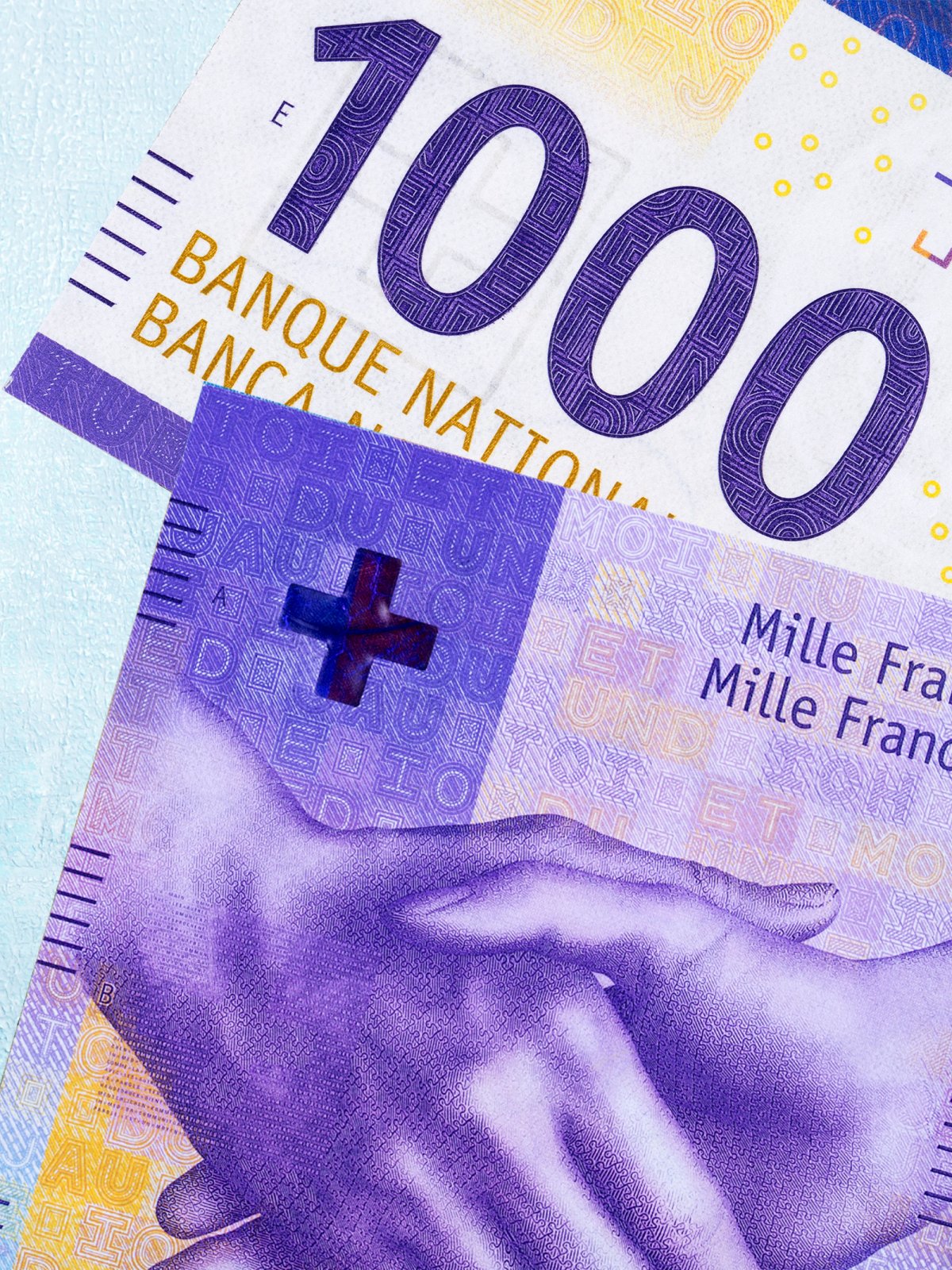
Interesting Facts About the 1,000-Franc Note
Most countries are phasing out high-value notes these days. The European Central Bank stopped printing 500-euro notes in 2016, and the UK withdrew them in 2010. The concern in both cases was that large notes primarily serve criminals.
The Swiss National Bank begs to differ. Its position is that the high proportion of large denominations simply means that banknotes are used beyond a form of payment, but rather as a store of value. And not for criminal activities.
A few numbers that put this into perspective:
New Swiss Banknotes Are Coming in the 2030s
The current ninth series will remain in our wallets for years to come. SNB president Martin Schlegel confirmed in 2025 that the notes are short of having a "midlife crisis."
But yet, development of the tenth series is already underway. In March 2026, the Swiss National Bank announced that Lausanne-based studio Emphase Ltd won the design competition with a concept themed "Switzerland and its altitudes."
Each denomination will be tied to a specific altitude zone, featuring native plants on one face and landscapes, architecture, and public transport on the other.
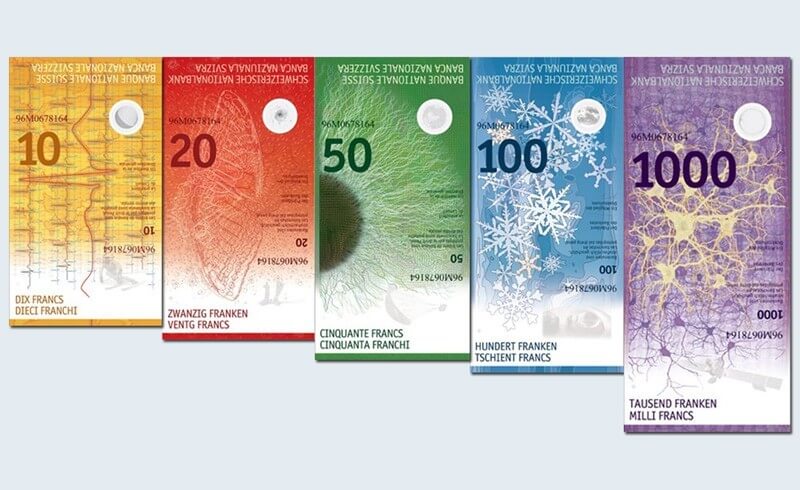
The new bills will mark the tenth change since 1907. The years 1911, 1918, 1938, 1956, 1976, 1984, 1995, and lastly 2016 saw new designs come in.
We've covered the full story, including the runner-up concept built entirely around real Swiss rocks: New Swiss Banknotes: Rocks, Plants, and Alpine Huts
Cash in a Digital Switzerland
Switzerland in 2026 is fully wired: contactless payments, mobile Twint wallets, and e-banking are normal. And yet, remarkably, one in three transactions is still made in good old-fashioned cash, a fact that honestly surprised me.
The enormous volume of 1,000-franc notes in circulation can't be explained by daily shopping alone, because most of it is savings. That's literal wealth quietly tucked away at home or in safety deposit boxes.
Yes, many Swiss trust our own currency enough to store it in the house instead of the bank.
For tourists, I always have this piece of practical advice: Always carry some francs. In a mountain hut during a power cut, in a market village on a Sunday, or at a street festival where the card reader has died, a handful of coins and a couple of bills can make all the difference.
Fun fact: The word "franc" stems from the Medieval Latin phrase Francorum Rex, or "king of the Franks," which was inscribed on French coins in the 14th century.


 Luc
Luc