

 Dimitri Burkhard
Sooner or later, someone in Switzerland will invite you to fondue. A colleague, a neighbor, your partner's parents. And at some point between the garlic and the kirsch, you'll realize everyone else at the table knows rules that nobody bothered to tell you.
That's fondue for you. It looks like the most relaxed meal in the world: one pot, a few forks, lots of bread. But around the caquelon, the Swiss follow a surprisingly detailed code. Lose your bread in the cheese, reach for a Coke, or lick your fork, and you will hear about it. Probably for the rest of the evening.
So here are the nine unwritten rules of Swiss fondue, checked against what Swiss cheesemakers, cooks and one very serious Zurich study actually say.
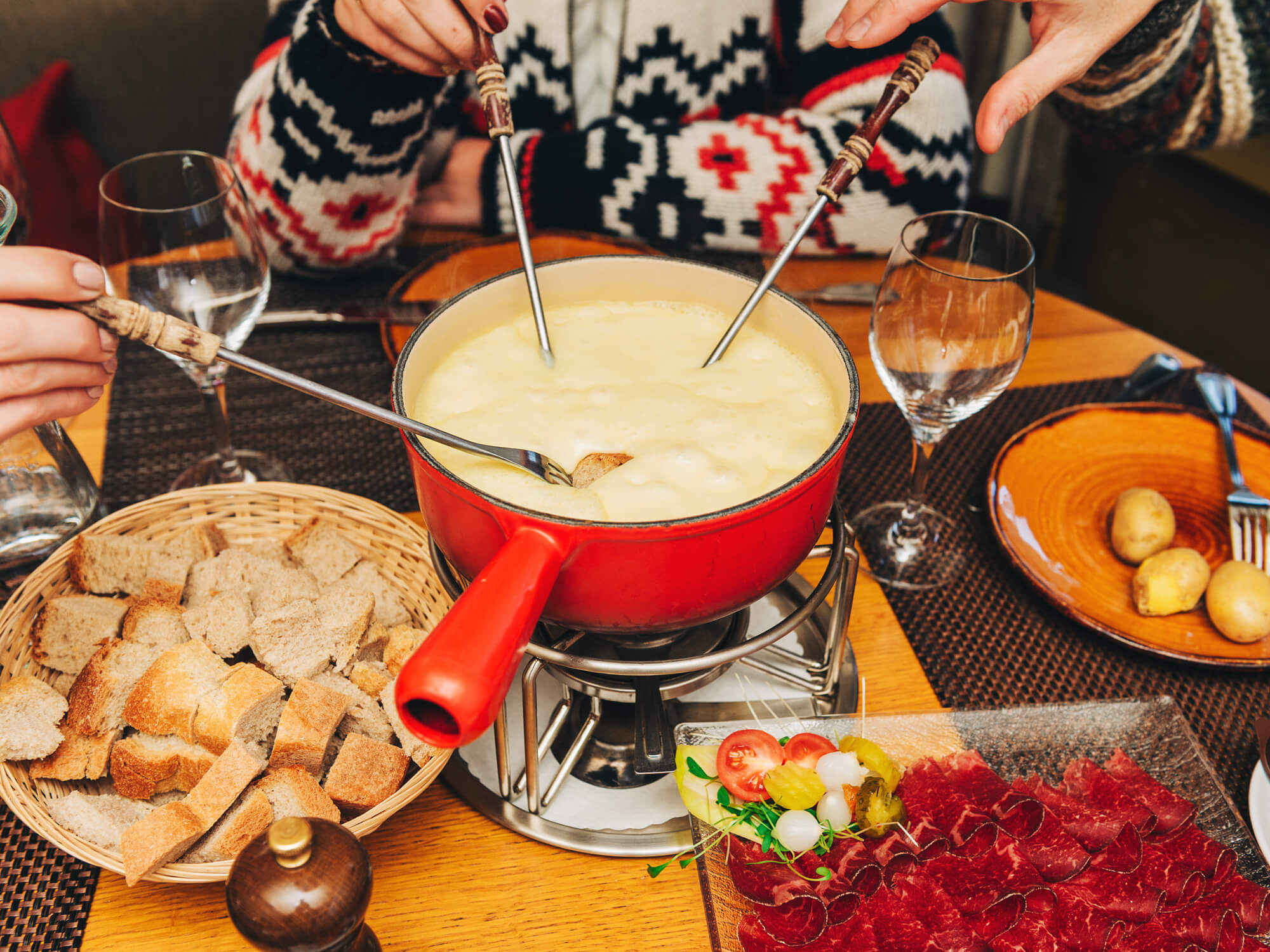
A Quick Bit of History (It's Younger Than You Think)
Melting cheese with wine is old. The earliest known recipe, Käss mit Wein zu kochen (“to cook cheese with wine”), appeared in a cookbook published in Zurich in 1699. But fondue as a national dish is a fairly modern idea.
In the 1930s, the Swiss Cheese Union started promoting it hard as a way to sell more cheese, and it worked. Their most famous slogan is still printed on aprons and caquelons today (more on that in the FAQ).
1. Spear the Bread Through the Crust
TL;DR
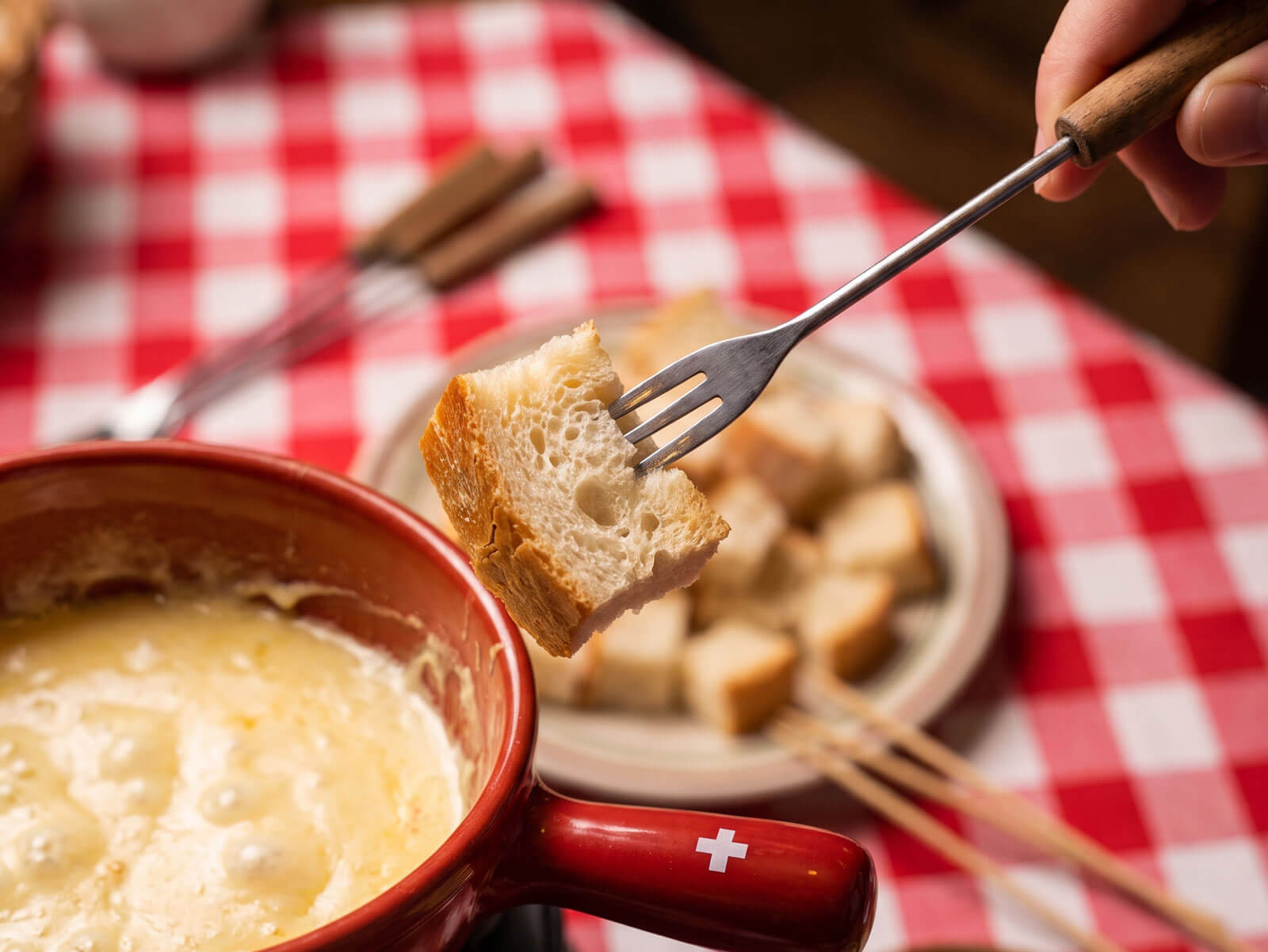
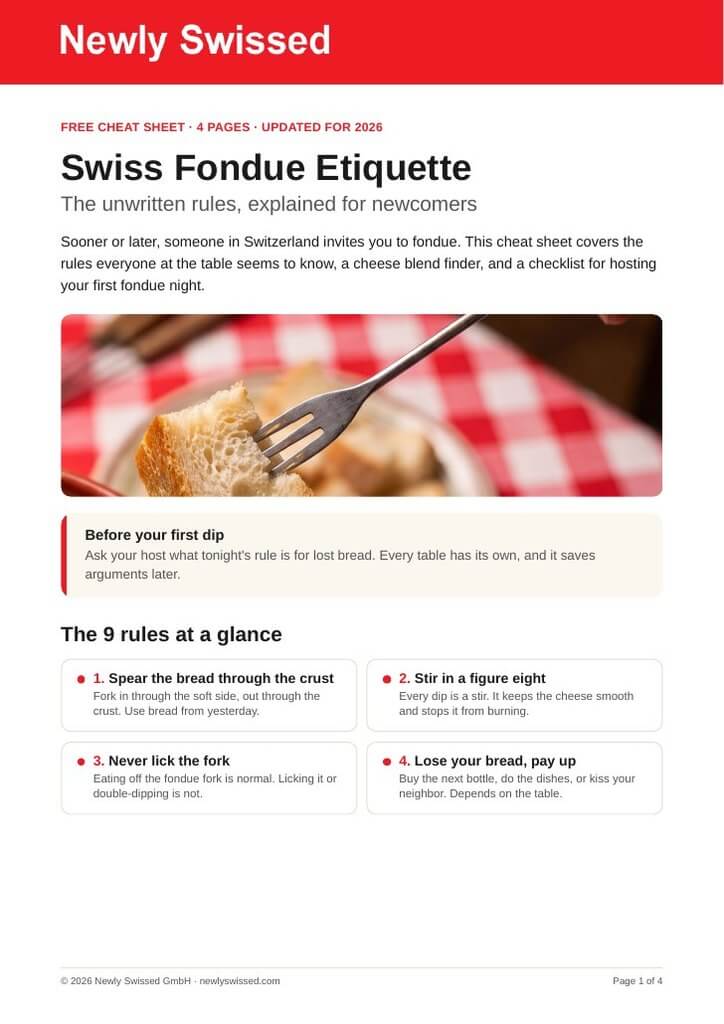
Push your fork through the soft part of the bread and out through the crust. The crust is what keeps the cube on the fork.
Swiss cooks use bread from the day before, not a fresh, fluffy baguette. Fresh bread goes soggy and falls apart in hot cheese. Cut it into bite-sized cubes so that every piece has some crust on it. If you only stab the soft crumb, it will come off mid-swirl. And then rule 4 kicks in.
2. Stir in a Figure Eight
TL;DR
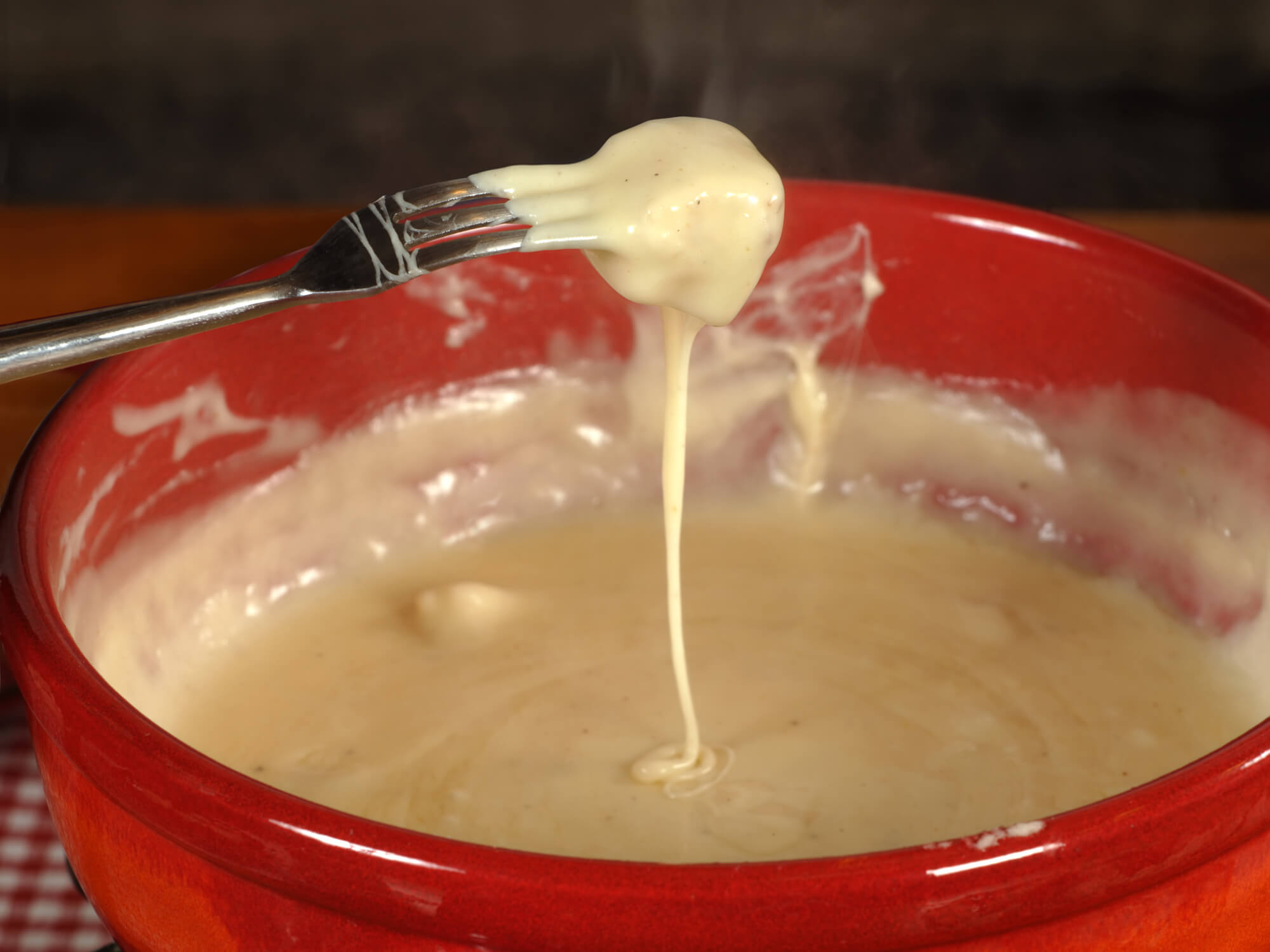
Every dip is also a stir. Draw a figure eight through the pot with your bread so the cheese stays smooth and doesn't burn on the bottom.
A fondue needs to be stirred all the time, otherwise it gets lumpy and sticks to the pot. At the table, nobody uses a spoon for this. Your bread does the job. Sweep it through the pot in a figure eight, lift it out, then twirl the fork a couple of times over the caquelon to catch the strings of cheese before they land on the tablecloth.
3. Don't Lick the Fork, and Don't Double-Dip
TL;DR
Remember that it's a shared pot. Eat your bread off the fork, but never lick it, and never put a bitten piece back in.
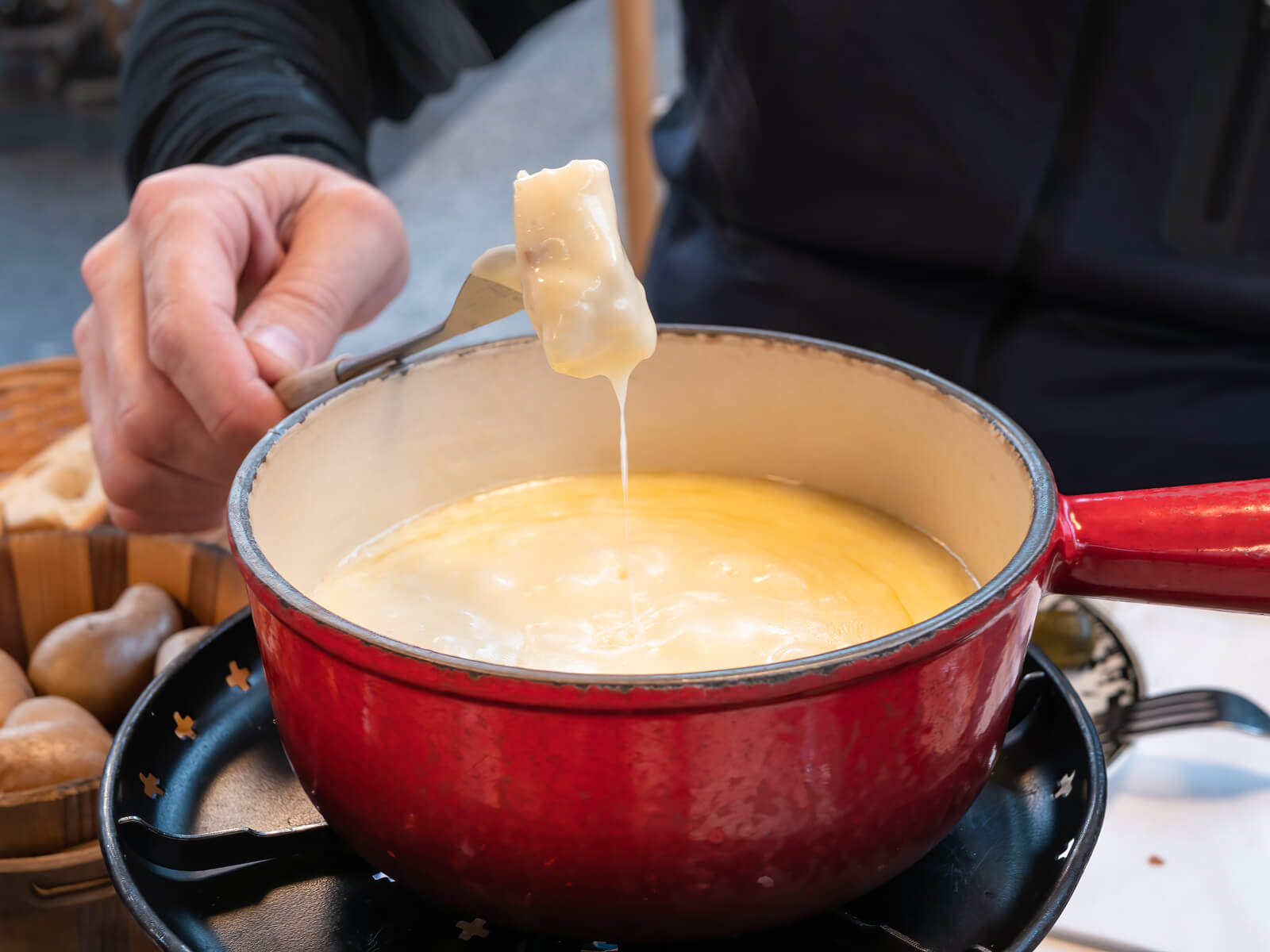
Some etiquette guides (mostly American ones) tell you to slide the bread onto your plate and eat it with a normal fork. In Swiss homes, almost everyone eats straight from the fondue fork. Just keep your lips off the metal as much as you can. That's partly good manners and partly self-preservation, because the fork comes out of the pot very hot.
The two real sins: licking the fork and double-dipping. Both will earn you looks.
One more practical tip from restaurant fondue nights: forks often have colored tips. Remember yours.
4. Lose Your Bread, Pay the Price
TL;DR
If your bread falls into the pot, there's a penalty... What it is depends entirely on who you're eating with, so ask before the first dip.
Losing a piece of bread in the cheese is the classic fondue crime, and every Swiss family seems to have its own punishment. The ones you'll hear most often:
- With friends or colleagues: you buy the next bottle of wine or a round of kirsch.
- At family tables: you do the dishes, sing a song, or take on some other small, embarrassing job.
- At livelier parties: you kiss the person next to you (or everyone at the table).
The rules change from table to table, so ask your host what tonight's house rule is. It saves arguments later.
In my family, we always make the "bread looser" run around the house barefoot. We're talking the outside of the house where there is usually snow on the ground...
5. Drink White Wine or Hot Tea, Not a Cold Coke
TL;DR
Order a dry Swiss white like Chasselas (called Fendant in Valais) or a pot of black tea. Skip the ice-cold drinks, mostly to keep the peace.
Ask a Swiss person what to drink with fondue and you'll get a firm answer. Many will tell you that cold water or fizzy drinks turn the cheese into a heavy lump in your stomach. One questionnaire study even found people expected anything from indigestion to death if you drank Coca-Cola with fondue.
In 2010, researchers at the University Hospital Zurich decided to test it. Twenty volunteers ate fondue with either white wine or black tea, followed by a shot of kirsch or a glass of water. The study ran in the BMJ's Christmas issue.
The result: the stomach emptied noticeably faster with tea or water than with wine and schnapps. But here's the twist: Nobody felt worse either way, and the lead researcher called both camps' claims old wives' tales.
The cold-water theory itself was never tested.
So the honest answer is: drink what you like, but at a Swiss table, white wine or tea will raise the fewest eyebrows. Ideally the wine is the same one that went into the pot. Halfway through, someone may pour a small kirsch. That's the coup du milieu, the “shot in the middle”.
6. Know Your Cheese Blend
TL;DR
“Fondue” on a Swiss menu can mean quite different things. The cheese blend changes by region, and so does the taste.
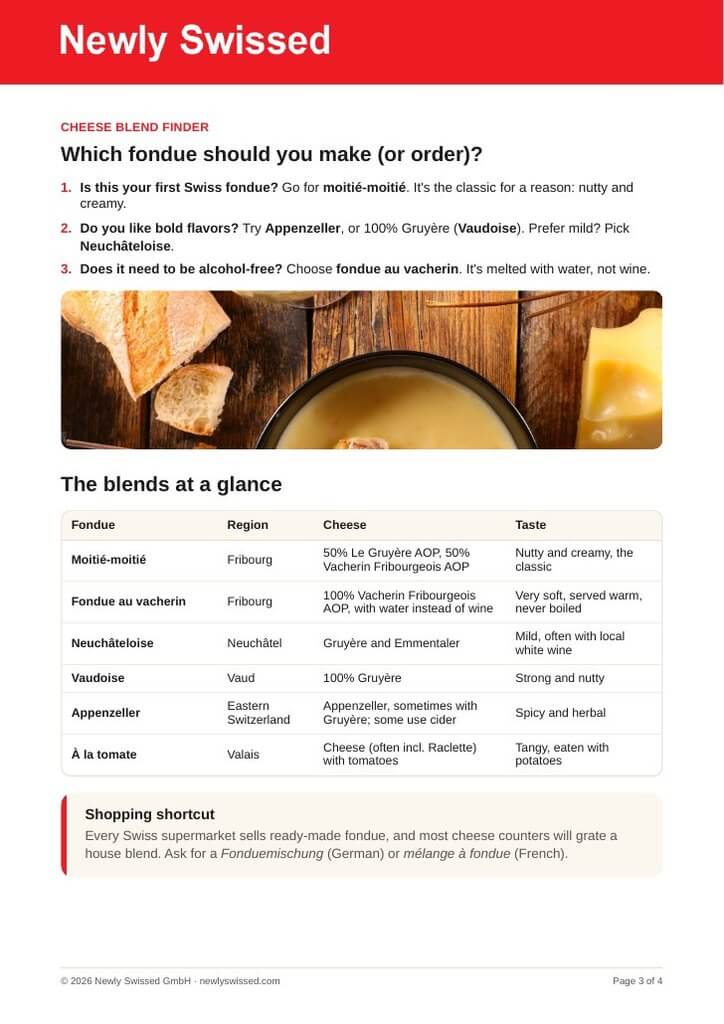
The best-known Swiss cheese fondue blends:
| Fondue | Where it's from | Cheese | What to expect |
|---|---|---|---|
| Moitié-moitié (“half-half”) | Fribourg | Le Gruyère AOP and Vacherin Fribourgeois AOP, 50/50 | This is the classic: Nutty from the Gruyère, creamy from the Vacherin |
| Fondue au vacherin (fribourgeoise) | Fribourg | 100% Vacherin Fribourgeois AOP, melted with water, not wine | Served warm rather than hot, very soft and creamy. Great with potatoes |
| Neuchâteloise | Neuchâtel | Gruyère and Emmentaler | Milder, often made with Neuchâtel white wine |
| Vaudoise | Vaud | 100% Gruyère | Strong and nutty |
| Appenzeller | Eastern Switzerland | Appenzeller, sometimes mixed with Gruyère | Spicy and aromatic, thanks to the secret herbal brine the cheese is washed with. Some make it with cider instead of wine |
| Fondue à la tomate | Valais | Cheese (often with Raclette cheese) and tomatoes | Pinkish, tangy, usually eaten with potatoes |
One honest footnote: Swiss food historians point out that some of these “regional” names were invented later. Nobody in Neuchâtel will stop you from adding Vacherin, though.
If you're not cooking from scratch, every Swiss supermarket sells ready-made fondue packs, and most cheese shops will grate a house blend for you. Just ask for a Fonduemischung (German) or mélange à fondue (French).
Bread isn't the only option, by the way. Small boiled potatoes are popular, especially with the vacherin fondue, and pickled onions and cornichons help cut through the richness.

7. Keep the Flame Low
TL;DR
A good fondue pot barely simmers. If it's bubbling hard, turn the burner down.
The small burner under the pot, the réchaud, is only there to keep the cheese warm and runny, not to cook it. If the fondue boils, the fat can separate and you end up with an oily mess, or the bottom burns too early.
The vacherin fondue is even more delicate and should never boil at all. Whoever sits closest to the burner usually ends up in charge of the flame.
8. Save the Crust: La Religieuse
TL;DR
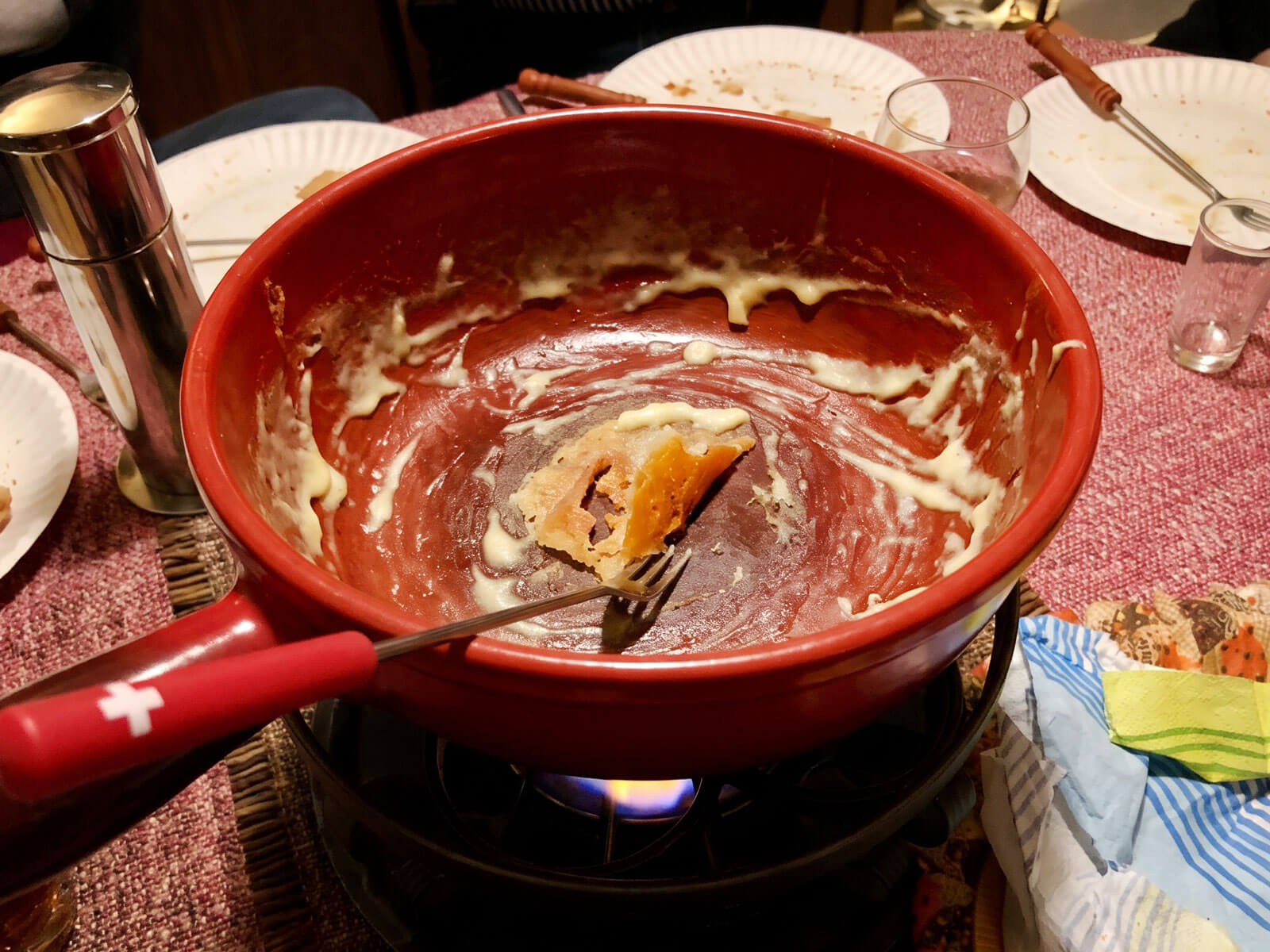
At the end, a thin, golden crust of toasted cheese is left at the bottom of the pot. It's called la religieuse (“the nun”) in French and Grossmutter (“grandmother”) in German-speaking Switzerland, and it's shared.
As the cheese runs low, the layer left on the bottom of the caquelon slowly toasts into a crispy, savory cracker. Many Swiss think it's the best part of the evening.
Don't scrape it away too soon! Keep the flame low so it browns without burning, then lift it out and break it up so everyone gets a piece. Some families crack an egg into the pot at the very end to soak up what's left.
Would you believe that many Swiss families fight over the remains at the bottom?
9. Keep Dessert Light
The short answer:
After a pot of melted cheese, the Swiss go for something fresh: fruit salad, a pear, sorbet, or a small digestif. They would never eat a chocolate fondue.
Remember, you'll eat around 200 grams of cheese per person. So, following it with cake is a bad idea, and following it with chocolate fondue is very foreign to us. A fruit salad, a lemon sorbet (maybe with a splash of kirsch or Williams pear brandy) or simply a coffee does the job.
The exception, of course, is in Gruyère. They have those giant Meringues with thick, almost spoonable crème double de la Gruyère as the region's signature dessert. It's best saved for a day when you've been skiing since 9 AM...
Where to Try Your First Fondue in Zurich
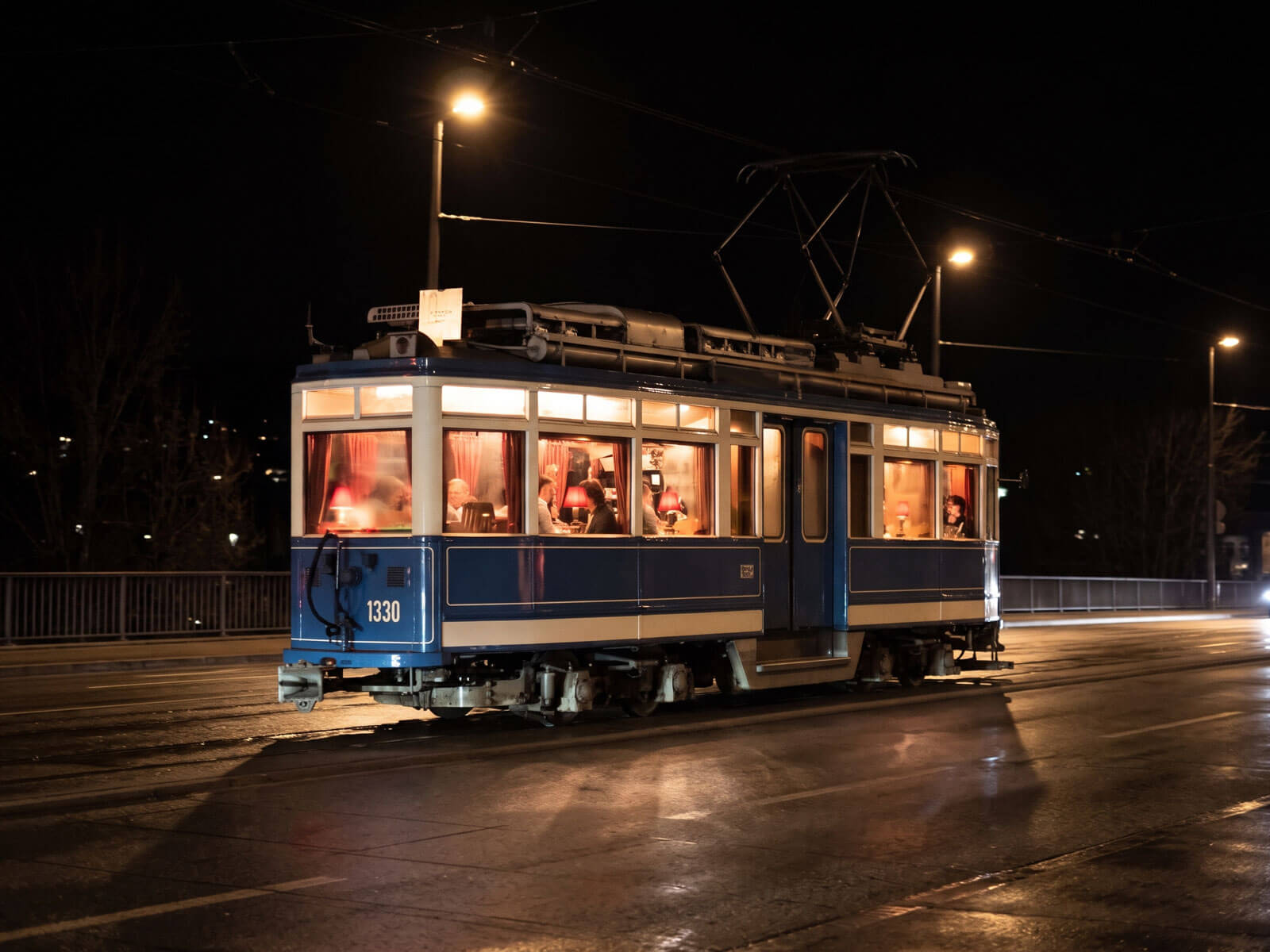
If you'd rather someone else stirs the pot, Zurich has a fondue experience you won't find anywhere else: the Fondue Tram. The VBZ event tram leaves from Bellevue, circles past Limmatquai, Paradeplatz and the Quaibrücke, and serves a starter, cheese fondue and dessert on the way.
It runs on selected evenings in winter, and seats sell out quickly before Christmas.
Get the Free Swiss Fondue Etiquette Cheat Sheet
Know the rules before your first dip
Get the free Swiss Fondue Etiquette Cheat Sheet and walk into your next fondue night like a local.
 4 pages · instant PDF
What's inside the Swiss Fondue Etiquette Cheat Sheet
- All 9 unwritten rules on one printable page
- A cheese blend finder: moitié-moitié, vacherin, Appenzeller and more
- A shopping list with quantities for 2, 4 or 6 people
- A host checklist for your first fondue night
- Fondue rescue tips for when the cheese splits or goes lumpy
Frequently Asked Questions
En Guete! And if your bread does end up in the pot, at least now you'll know what you owe the table... While you're at it, learn about more Swiss winter foods.

 Christian


Add comment