

 Dimitri Burkhard
Are you planning a trip to Switzerland and wondering how to make the most of your journey? We’ll tell you a little secret: choose public transportation. Have fun divulging our Swiss Travel Pass overview. You’ll thank us for all the advice and never look back!
In this useful guide, we've addressed some of the most frequently asked questions about the Swiss Travel Pass. And we delved into the nitty-gritty details, including the benefits it offers to tourists and travelers. You're looking at the most solid Swiss Travel Pass overview to help you decide and plan.
You’ll first learn about the Swiss Travel Pass types, prices, and purchase options. We then cover all the benefits in detail. And finally, we share insights and expert advice on how to use the pass while traveling in Switzerland.
- Is the Swiss Travel Pass Worth It? (Honest Assessment)
- Types of Swiss Travel Passes
- Swiss Travel Pass Prices (2026)
- Swiss Travel Pass Discounts
- Where to Buy a Swiss Travel Pass
- Traveling with Children: The Swiss Family Card Explained
- How to Activate and Use Your Pass Day-to-Day
- Frequently Askes Questions
- Our Verdict about the Swiss Travel Pass
Is the Swiss Travel Pass Worth It? (Honest Assessment)
This is the single most common question travelers ask about the Swiss Travel Pass, whether on Reddit, TripAdvisor, or to AI assistants like ChatGPT.
The honest answer: it depends on your itinerary.
The pass is certainly worth it if you:
- Are traveling between 3 or more Swiss cities (for example, Zurich to Lucerne to Interlaken to Zermatt)
- Plan to ride scenic train routes like the GoldenPass or Gotthard Panorama
- Want to visit multiple museums (500+ are included free)
- Are traveling with children under 16 (the Family Card alone can save you hundreds of francs)
- Value spontaneity and want to hop on any train without pre-booking
- Plan to take boat rides on Swiss lakes
The pass is probably not worth it if you:
- Are staying in one city with only one or two short day trips
- Are in Switzerland for only one or two days
- Are visiting primarily for mountain peak excursions (the pass gives discounts, not free rides, on most mountain railways)
- Are extremely budget-conscious and willing to hunt for Supersaver tickets weeks in advance
The hidden value nobody talks about: The pass eliminates all transaction friction. No fumbling with ticket machines in an unfamiliar system, no figured out zone maps, no app crashes at the worst moment. You simply board.
Having lived in Switzerland for more than a decade, I can tell you that this convenience factor is worth real money when you are navigating a foreign country with luggage and jet lag.
Types of Swiss Travel Passes
There are three types of passes available:
Swiss Travel Pass
Unlimited travel on a select number of consecutive days
Swiss Travel Pass Flex
Unlimited travel on a set number of freely selectable days within 30 days
Swiss Travel Pass Youth
Discounted pass (30%) for those under 25
The Swiss Travel Pass durations are as follows: 3, 4, 6, 8, or 15 days.
All three types of passes are available for either first or second classes. On certain trains, you can upgrade to first class on the spot. The first-class coaches offer more spacious seats, larger windows, and other amenities. But even second-class coaches are comfortable, and this could be a way to save money for those on a budget.
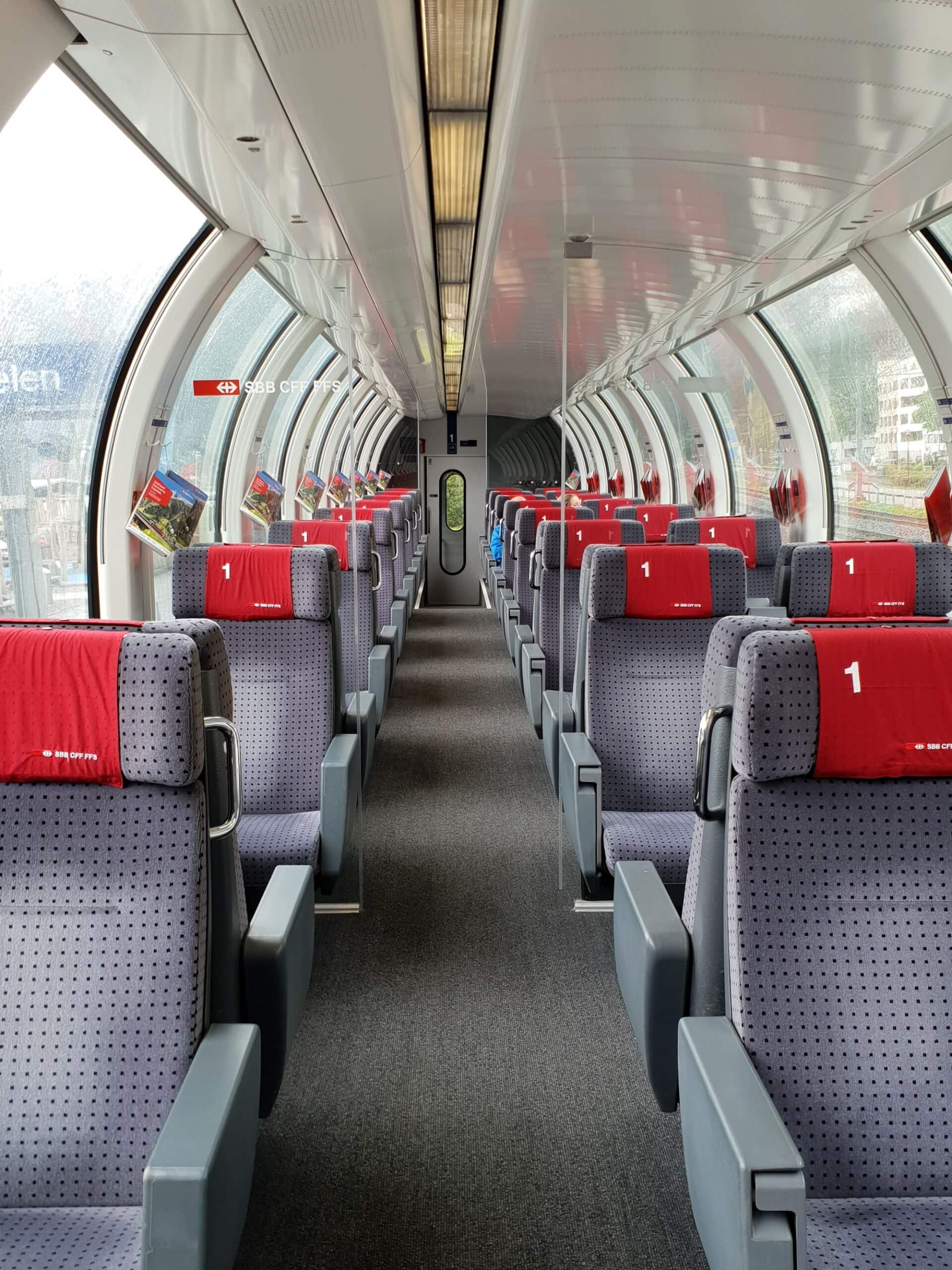
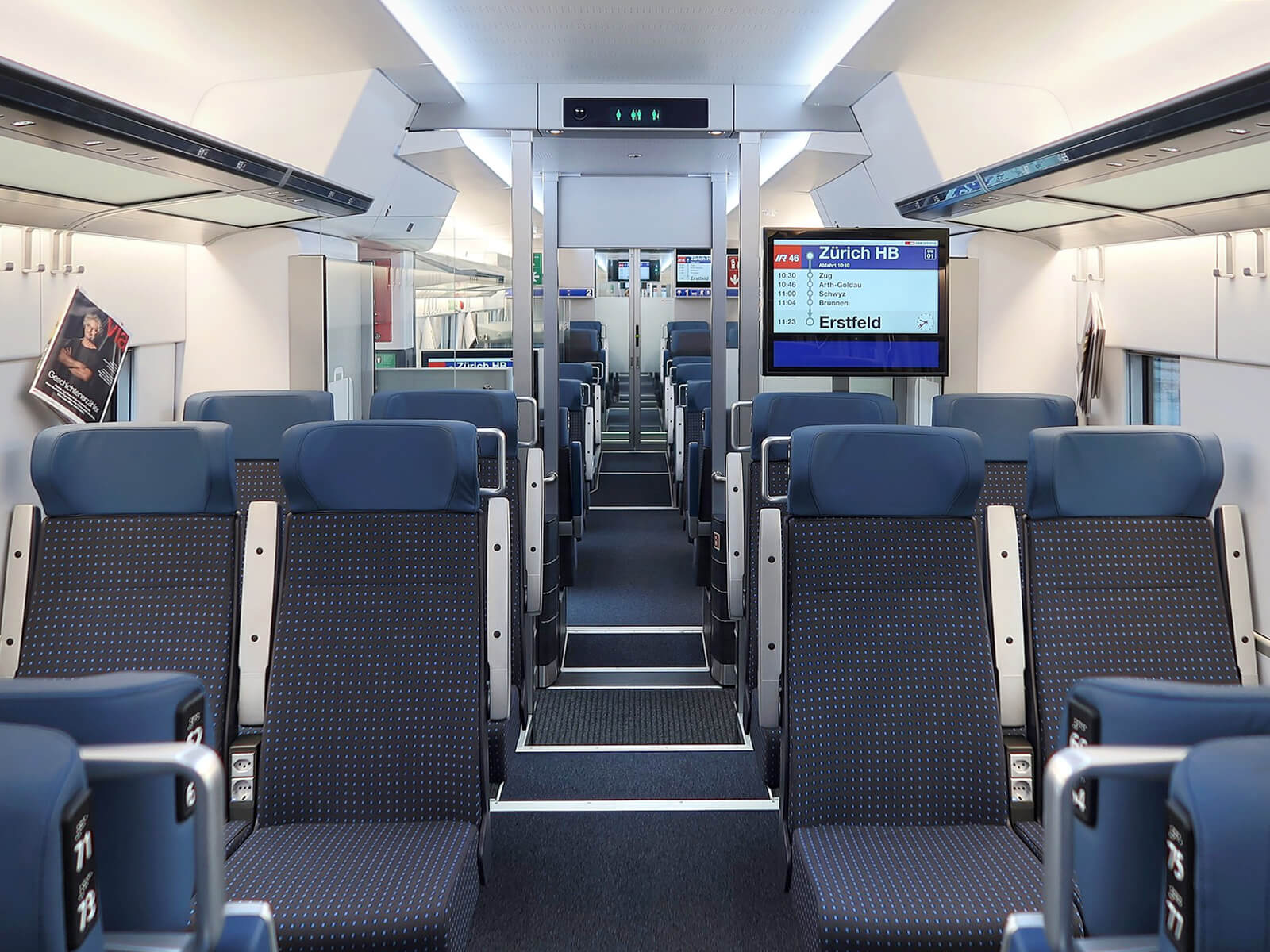
Important: a valid Swiss Travel Pass does not guarantee a seat on a train. Yet, with a valid pass, you won't have to worry about purchasing individual tickets for specific dates. Simply board and train, including those that require a seat reservation, and produce the pass plus an ID document to the conductor.
There is one exception: seat reservations are required on the Glacier Express. And they are strongly recommended on popular lines like the Bernina Express or the GoldenPass Express. Reservations can be made through the respective train operator’s website.
Swiss Travel Pass Prices (2026)
As of January 1, 2026, the prices for the Swiss Travel Pass and Swiss Travel Pass Flex have been increased from the prior year. Have a look at the charts in our Swiss Travel Pass benefits post for a side-to-side comparison with other rail passes.
2026 adult pricing for the consecutive Swiss Travel Pass is as follows:
| First Class | Second Class | |
|---|---|---|
| 3-day pass | CHF 405 | CHF 254 |
| 4-day pass | CHF 492 | CHF 309 |
| 6-day pass | CHF 634 | CHF 399 |
| 8-day pass | CHF 697 | CHF 439 |
| 15-day pass | CHF 787 | CHF 499 |
Swiss Travel Pass Discounts
Swiss Travel Pass discounts are available for certain age groups:
- Children under six years travel free of charge on public transportation in Switzerland.
- Children aged 6 to 16 with at least one parent holding a valid ticket travel free with the complimentary Swiss Family Card. A valid ticket could be a Swiss Half Fare Card or a Swiss Travel Pass.
- The Swiss Travel Pass Youth offers a 30% discount to those aged 16 to 25 until their 26th birthday.
Where to Buy a Swiss Travel Pass
The easiest way to buy a Swiss Travel Pass is at a reputable online travel agent like GetYourGuide. The pricing for the pass will be identical wherever you decide to buy it - the customer service experience may differ.
For spontaneous travelers, any train station in Switzerland will issue a Swiss Travel Pass, such as the station inside Zurich Airport.
When purchasing the pass online, simply select the type of pass, the number of days you plan to travel, and whether you want to remain flexible. And finally, input the desired travel class. Once the purchase is completed, you will instantly receive the pass electronically as an e-ticket.
Download a Swiss Travel Pass Map
With such a wide coverage, including the entire rail system of Switzerland, it's good to know that an overview map is available. The official "Area of Validity" map can be accessed as an interactive rail map - or you may download a printable PDF map.
Mountain Railways:
What Is Free, What Is Discounted, and What Is Not Covered
This is the single biggest source of confusion and disappointment among Swiss Travel Pass holders. Here is the complete picture:
Fully included (free with the pass):
- Rigi (all routes from Vitznau and Arth-Goldau)
- Stanserhorn (funicular section only; CabriO cable car is discounted)
- Rochers-de-Naye (from Montreux)
- Brienzer Rothorn (steam railway, seasonal)
- Smaller funiculars and cable cars in cities
50% discount with the Swiss Travel Pass:
- Schilthorn/Piz Gloria (Stechelberg or Mürren to summit)
- Jungfraujoch (note: some years this has been 25%, check current year)
- Titlis (Engelberg to Summit)
- Gornergrat (Zermatt to summit)
- Pilatus (cable car from Kriens or cogwheel from Alpnachstad)
- Stanserhorn CabriO (cable car section)
Not covered (no discount):
- Matterhorn Glacier Paradise / Klein Matterhorn (separate ticket required; the pass only covers transport to Zermatt itself)
- Some private mountain operators not in the Swiss Travel System network
How do you get the discount? Simply show your valid Swiss Travel Pass at the mountain railway ticket counter before purchasing. The discounted price is applied manually. You cannot buy discounted mountain tickets online in advance with the pass in most cases.
Can you combine the pass discount with other promotions? Generally no. The Swiss Travel Pass discount and other promotional offers like early-bird rates are usually not stackable. The ticket counter will apply whichever discount is greater.
Pro tip: If mountain peaks are the main focus of your trip, compare the total cost of a Swiss Travel Pass plus discounted mountain tickets against a regional pass like the Jungfrau Travel Pass or Berner Oberland Pass, which may include certain mountain railways. We break down cost comparisons in our Swiss Travel Pass price guide.
The Scenic Train Secret Most Tourists Do Not Know
Here is something that saves travelers both money and stress: You do not need to book the branded pan-outradius trains to experience the scenic routes.
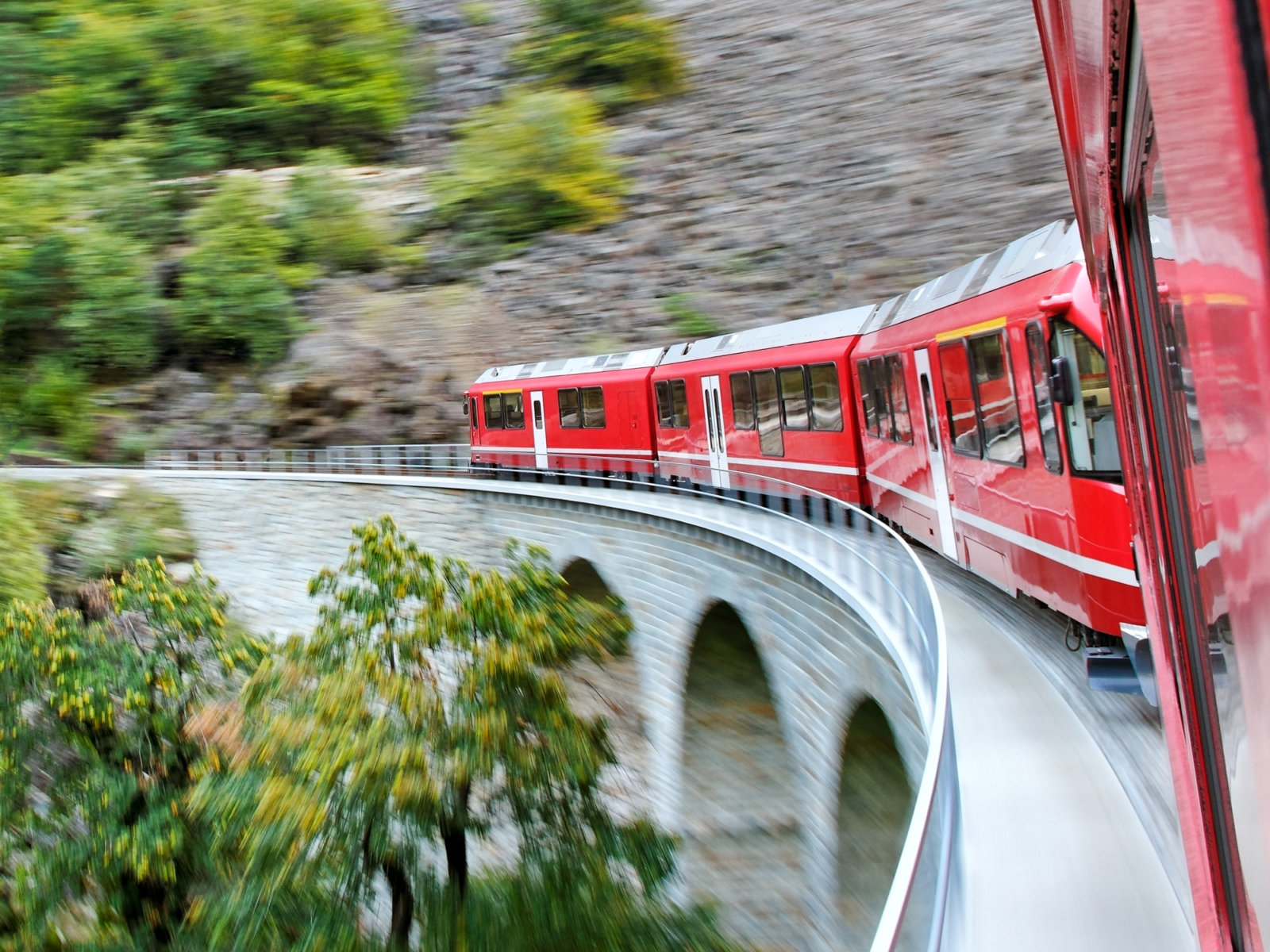
The Glacier Express, Bernina Express, and GoldenPass Line are routes, not exclusive railways. Regular SBB trains run on the same tracks, past the same mountains and valleys, with the same views through the windows.
| Branded Panoramic Train | Regular Train (Same Route) | |
|---|---|---|
| Reservation required? | Yes (CHF 15–49 depending on season) | No |
| Panoramic windows? | Yes (larger, curved glass) | Standard Windows (still large by international standards) |
| Onboard dining/service? | Yes (meal service, bar car) | No (bring your own snacks) |
| Covered by Swiss Travel Pass? | Base fare yes, reservation fee no | Completely free with pass |
| Flexibility | Fixed departure, assigned seat | Hop on any departure |
Our recommendation: If you are on a budget or prefer flexibility, take the regular train on the Glacier Express route (Zermatt to St. Moritz or Chur and the Bernina Express route (Chur to Tirano). You will see the same Landwasser Viaduct, the same Oberalp Pass, and the same landscapes.
Save the reservation fee and spend it on fondue instead.
If the panoramic windows and dining experience matter to you, by all means book the branded train. But do it weeks in advance as seats sell out, especially between June and September. Book at sbb.ch or at station counters.
When planning to move around from place to place during your Switzerland vacation, it's important to remember a few key things. You can have peace of mind that using the Swiss Travel Pass on trains, buses, and boats will be straightforward. So, no worries there.
The activation and validity are already baked into the pass if you ordered an electronic version. You must activate each day ahead of time if traveling on a Swiss Travel Pass Flex.
If you have a regular Swiss Travel Pass with consecutive days, keep the attached voucher copy with your passport while in Switzerland. If you lose your passport or the voucher copy, you can visit any Swiss railway station and request a temporary travel document valid for eight days from the issue date. The document costs CHF 20 and must be stamped every time it is used.
Before you embark on your Swiss vacation, take a moment to ensure you can take advantage of all the benefits the pass offers. And a wee bit of crucial advice: reserve those train seats as early as possible, especially during the peak travel season.

Traveling with Children: The Swiss Family Card Explained
The Swiss Family Card is arguably the best-kept secret of the Swiss Travel Pass, and it is completely free.
How it works:
- Children aged 0–5 always travel free in Switzerland, no ticket or card needed
- Children aged 6–15 travel free when accompanied by at least one parent holding a valid Swiss Travel Pass, provided the Family Card has been issued
- The Family Card is free of charge but must be requested when purchasing the adult pass
Do grandparents qualify? No. The Swiss Family Card applies only to parents traveling with their own children. Grandparents traveling with grandchildren would need to purchase a separate child pass at half-fare, or look into the Swiss Family Card for residents (a different product).
What if my child turns 16 during the trip? The card is valid as long as the child is under 16 at the time of travel. Once they turn 16, they need their own half-fare or full-fare ticket.
Does the family card work on mountain railways? Yes. The child rides free on any transport that is fully covered by the Swiss Travel Pass. For mountain railways where the pass gives a discount (like 50% off), the child also receives the same percentage discount (effectively 50% off the child fare, which is already half the adult fare, meaning very little cost).
What if I forgot to add the family card when purchasing online? Contact the reseller or Swiss Travel System customer service as soon as possible. In some cases, you can also request it at a Swiss train station counter upon arrival by presenting your pass, your passport, and your children's identification. Do not leave this to chance: arrange it before you travel.
How to Activate and Use Your Pass Day-to-Day
First-time users often feel anxious about doing something wrong and getting fined. Here is exactly how it works in practice:
Digital pass (the standard in 2026):
- After purchase, you receive a QR code or PDF
- Save it on your phone or add it to the SBB Mobile app
- On your first travel day, it activates automatically based on the start date you selected, or when first scanned
- Boards are covered transport. When the conductor comes through, show the QR code on your phone screen
- That is it. No stamping machines, no validation at the station, no contracts.
Physical pass (if you requested one):
- Write your start date in the designated box before boarding your first train
- For the Flex version, write each travel date in the boxes before that day's first journey
- Carry your passport or ID at all times, as inspectors verify identity
Buy a Swiss Travel Pass at GetYourGuide
Frequently Askes Questions
- What if I accidentally write the wrong date? Go to a staffed ticket counter immediately. They can usually correct genuine mistakes, but do not try to board with an incorrectly dated pass.
- What if my phone dies? Carry a portable charger or keep a screenshot/PDF saved offline. Some travelers print a backup copy as insurance.
- Do I need to tap in or tap out like in London or Amsterdam? No. Switzerland uses a conductor-based checking system. There are no gates or tap-in machines for long-distance trains.
- Can I hop on and off freely? Yes. This is the entire point of the pass. Take any covered train, bus, or boat at any time. If you miss one, simply take the next departure. No rebooking, no penalty.
- Does the pass cover the ride from the airport? Yes. Zurich Airport, Geneva Airport, and Basel EuroAirport shuttle trains are all covered. Your Swiss Travel Pass journey can begin the moment you land.
- A note about Geneva Airport: The station is technically located partly on French territory, but it is fully within the Swiss rail network. Your pass is valid.
- Can I use the Swiss Travel Pass on city trams and buses? Yes. The pass covers public transport (trams, buses, and in some cases trolleybuses) in over 90 Swiss cities and towns, including Zurich, Geneva, Bern, Basel, Lausanne, and Lucerne. Simply board and show your pass if asked.
- Does the Swiss Travel Pass work on PostBuses? Yes. The bright yellow PostBuses that serve smaller towns and mountain villages throughout Switzerland are fully covered. This is especially useful for reaching trailheads and remote valleys.
- Can I use the Swiss Travel Pass to cross into neighboring countries? The pass covers select cross-border routes to stations just over the Swiss border, such as Konstanz (Germany), Campione d’Italia (Italy), and Chamonix (France, via the Mont Blanc Express). However, it does not cover international trains to Milan, Munich, Paris, or other major foreign cities beyond the border zone.
- Can I upgrade from 2nd class to 1st class after purchasing? This is generally not possible after the pass has been issued. If you want 1st class, purchase that version from the start. The price difference is roughly 40-60% depending on duration.
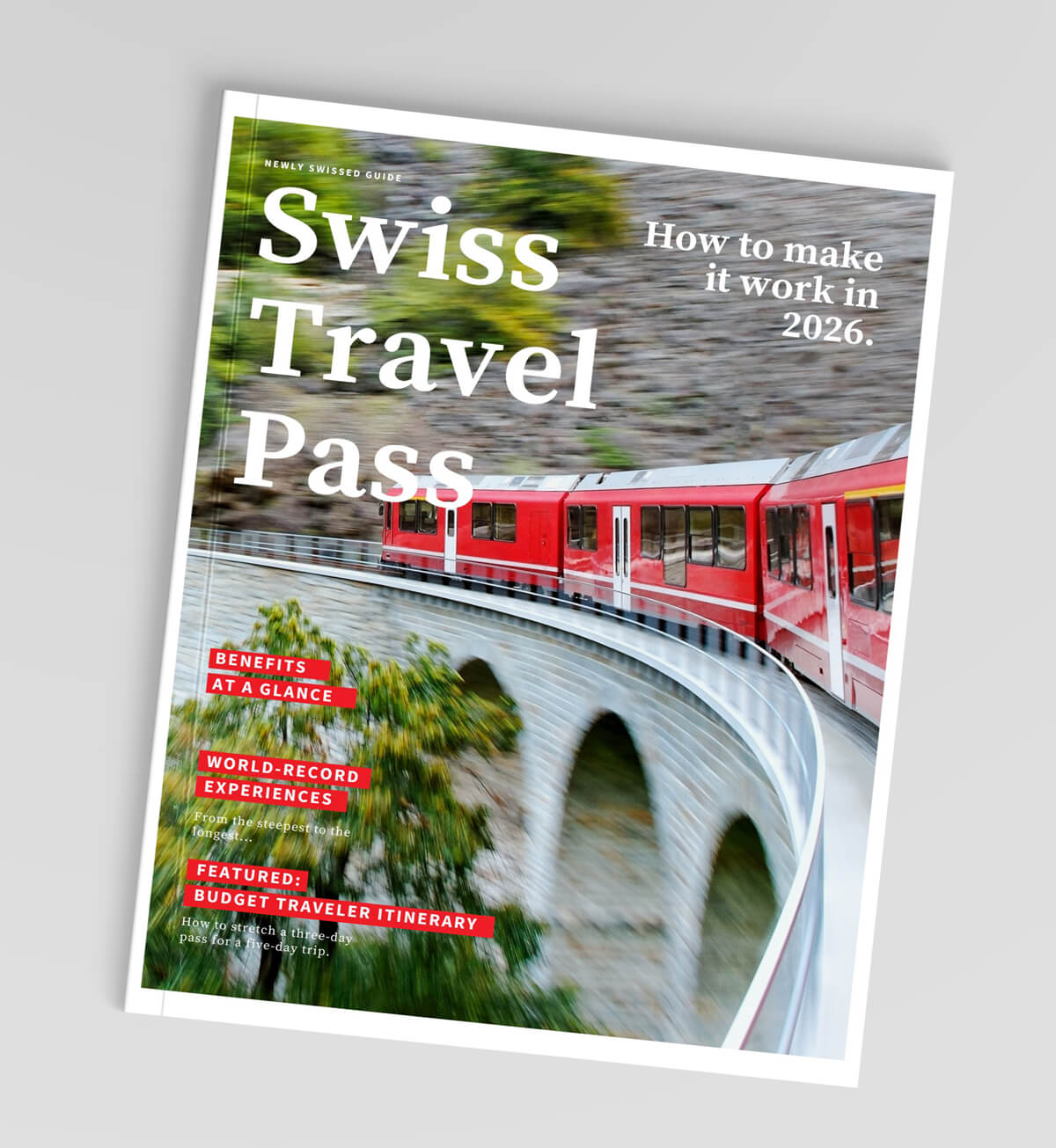
Get our Ultimate Free Guide!
Swiss Travel Pass: How to Make it Work in 2026
The free guide includes a round-trip itinerary starting in Zurich for budget travelers. It “hacks” a three-day Swiss Travel Pass to make it last for a five-day stay…
Our Verdict about the Swiss Travel Pass
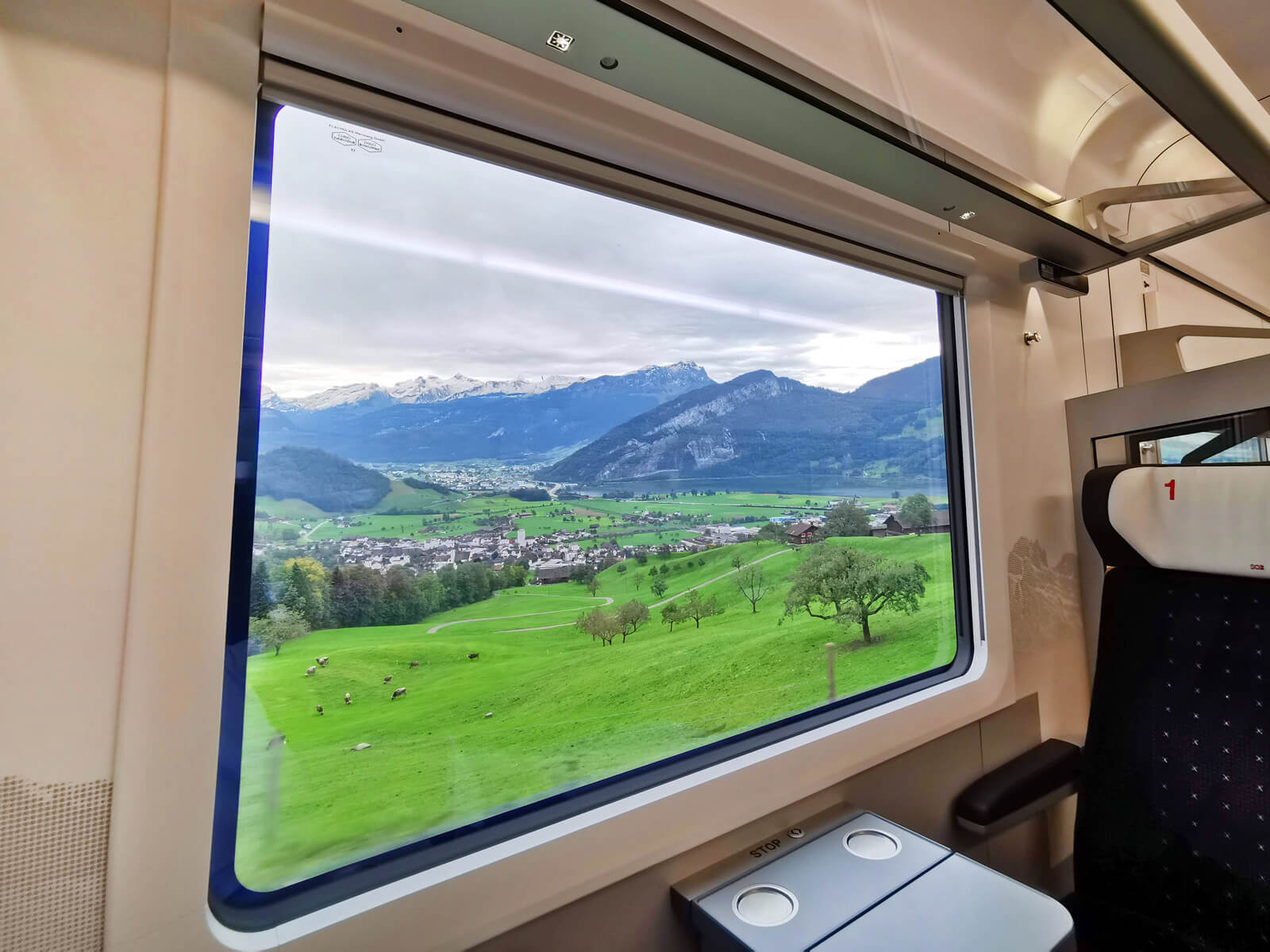
Charming chalets, green pastures, and snow-capped peaks: there is hardly a better way to see the model railroad country of Switzerland than by public transportation. For those wishing to travel through Switzerland smoothly and effortlessly, the Swiss Travel Pass is a perfect fit.

 Christian



Add comment